WHY HALFWAY TO TRICHET
EDU DDA Jul. 29, 2026
The FOMC held policy rates steady by a 9–3 vote, despite three dissents favoring an increase because of their inflation ghosts. Its concise statement correctly identified elevated price changes as the result of a narrow energy supply shock, but it overstated labor-market resilience by failing to explain the sharp decline in the labor force. Because of this, policymakers don’t make the connection markets have. Furthermore, international CPI reports show little evidence of second-round inflation. The episode also demonstrates the danger identified by Friedman and Coase, how central banks and Economics in general got to be this way.
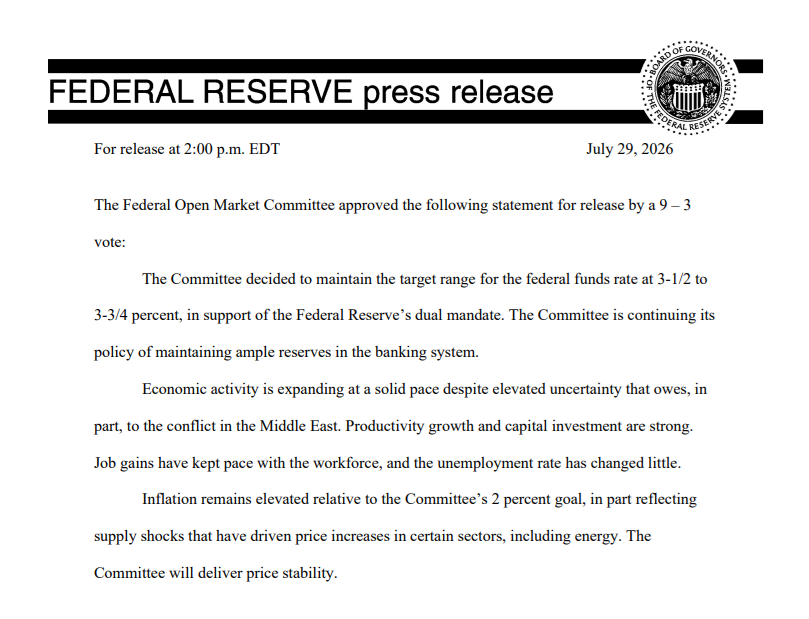
The Federal Open Market Committee (FOMC) left its policy rates unchanged by a 9–3 vote, but neither the vote nor the decision was the meeting’s most important feature. Cleveland Fed President Beth Hammack, Minneapolis Fed President Neel Kashkari, and Dallas Fed President Lorie Logan dissented in favor of raising rates, responding to inflation risks that financial markets insist are largely nonexistent. The more revealing development was the FOMC’s newly compressed statement.
Relatively new Chair Kevin Warsh has stripped away much of the language accumulated during the previous era, yet the few sentences that remain expose the central disagreement over inflation, employment, and the economy.
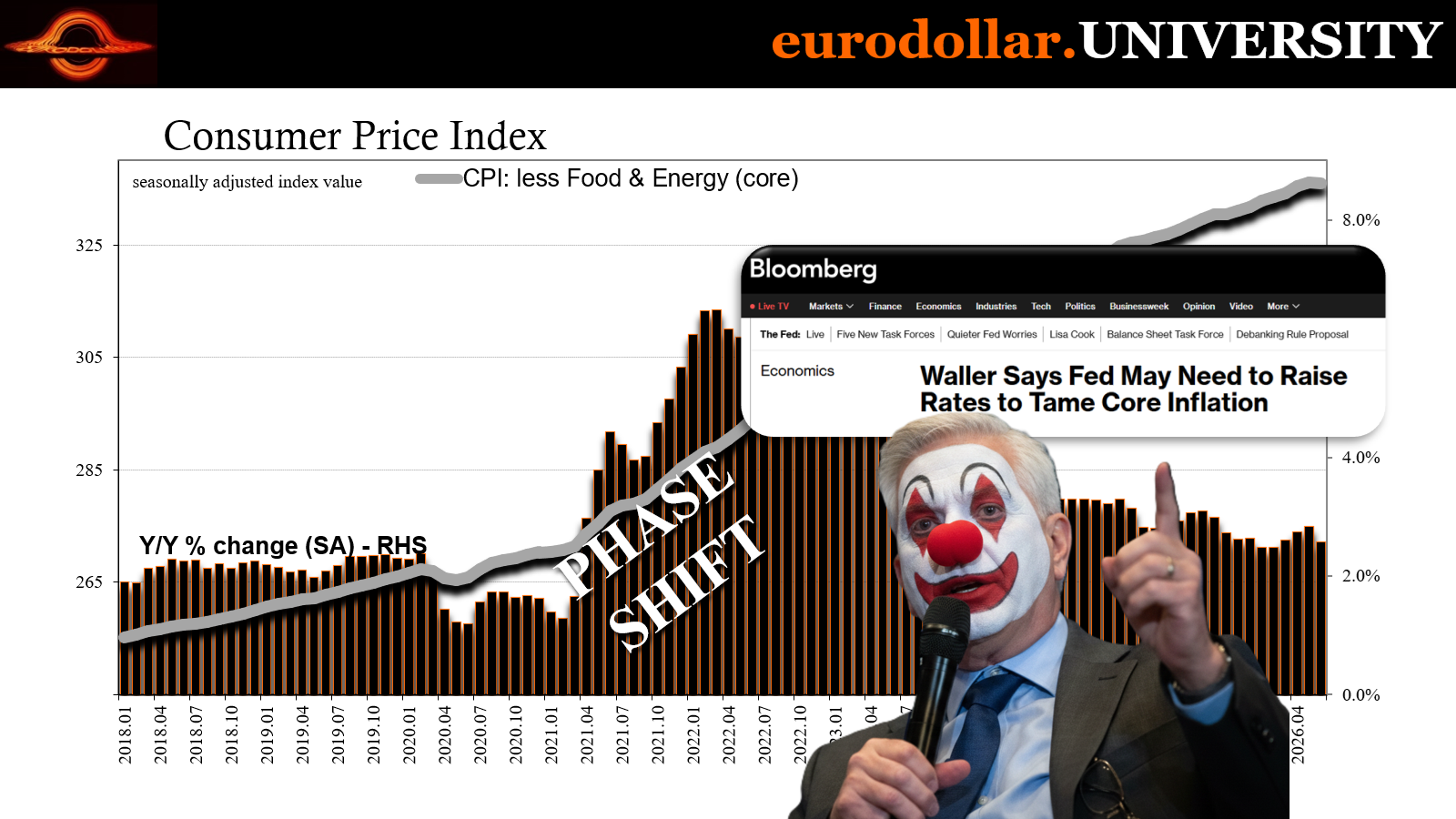
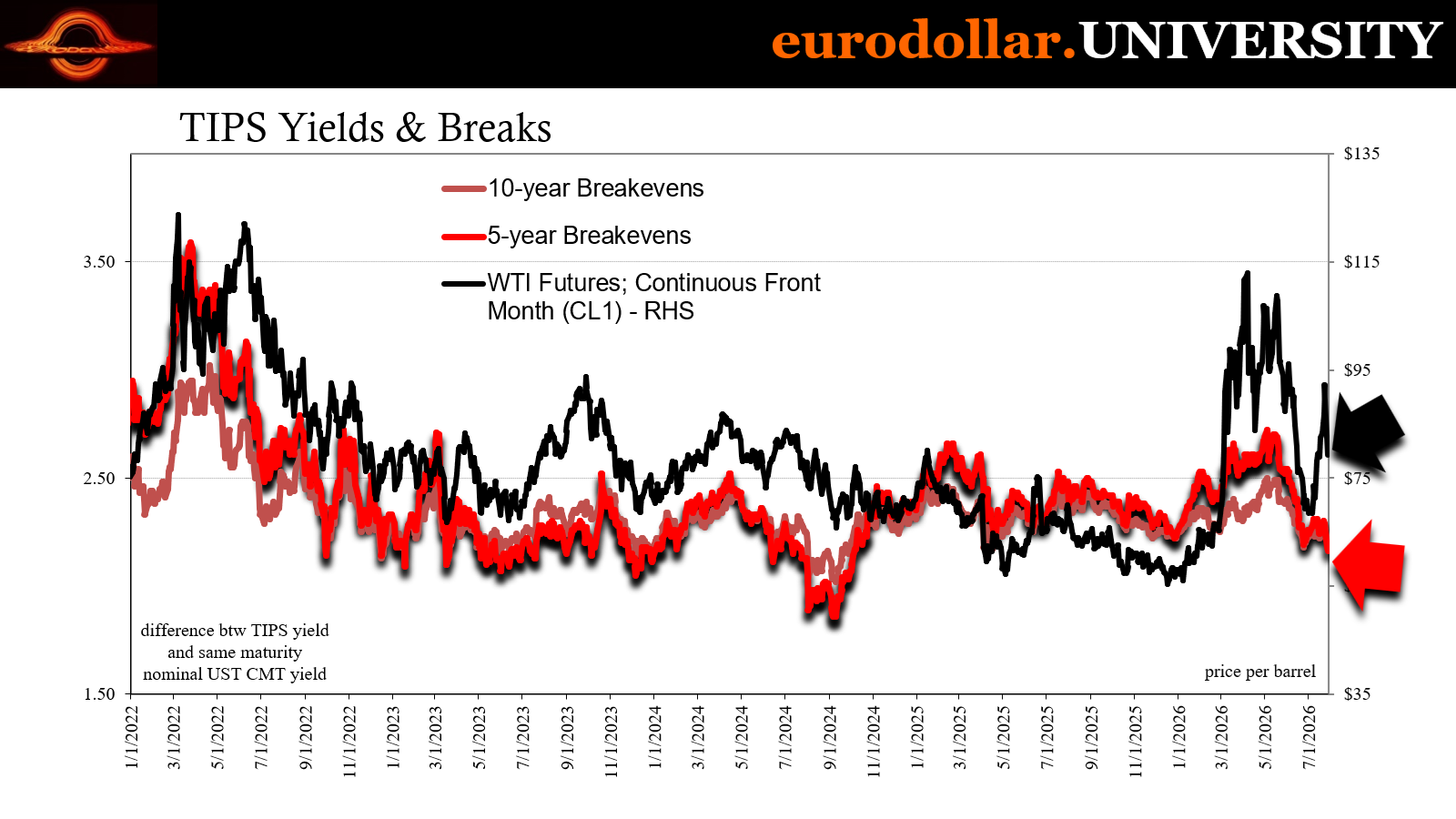
On inflation, the statement was unusually accurate: “Inflation remains elevated relative to the Committee’s 2 percent goal, in part reflecting supply shocks that have driven price increases in certain sectors, including energy.” This describes an energy-specific price shock rather than a generalized inflation process. Evidence from the United Kingdom, Canada, Japan, and now Australia supports that distinction, while oil markets and Treasury inflation-protected securities show little expectation of lasting second-round effects.
On employment, however, the statement was less convincing: “Job gains have kept pace with the workforce, and the unemployment rate has changed little.” That formulation accepts the unemployment rate at face value while avoiding the more troubling question of why the labor force has fallen so sharply.
Markets see a connection the FOMC has not fully acknowledged. A shrinking labor force is evidence of economic weakness, and that weakness is one reason higher energy costs have not spread into sustained inflation. This conflict also raises a larger methodological issue. Modern policy econometrics inherited intellectual support from Milton Friedman’s Positive Economics, which judged theories by their predictions rather than the realism of their assumptions. It began as a disciplined idea but drifted toward the abstraction Ronald Coase once criticized: models increasingly detached from the actual economic system.
The latest FOMC meeting shows both possibilities—the value of following evidence and the danger of chasing inflation ghosts generated by models.
Three dissents, one decision, two narratives
The 9–3 vote was immediately said to be hawkish because all three dissenters wanted higher rates. It was the predictable trio: Cleveland Beth (Hammack), Minny Neel (Kashkari), and Dallas Lorie (Logan). They were that the energy shock had created enough inflation danger to justify doing something about it today.
Their position reflects a familiar central-bank sequence. A commodity price rises, headline inflation accelerates, econometric forecasts extrapolate the initial increase, and policymakers begin warning about expectations, pass-through, and second-round effects before those effects appear in the data. Central banks claim to be forward-looking, which isn’t necessarily the wrong approach, rather the lens through which Economics peers into the future which is.
Yet the majority’s decision to hold rates steady suggests that most of the Committee was unwilling to transform a relative-price shock into a monetary-policy emergency. That is an important distinction. A rise in oil, natural gas, or electricity prices unquestionably raises household expenses and may lift headline consumer-price indexes.
It doesn’t automatically produce inflation in the broader monetary sense. For that to happen, the initial shock must persist and spread which requires the money to do it: workers must obtain compensating wage increases, firms outside the affected sector must acquire pricing power, credit and nominal spending must support those increases. The evidence for that chain remains entirely absent.

The statement’s reference to “price increases in certain sectors, including energy” therefore matters. It correctly identifies the source and acknowledges its narrowness. The sentence doesn’t deny that measured inflation is elevated, just like markets recognize what has already happened. The FOMC also accurately explains why. In doing so, the majority is, at least on this question, adhering more closely to observable evidence than to models that mechanically convert an oil shock into generalized future inflation.
The dissents didn’t produce the reaction in bonds the media was expecting. Rather than tilt the committee more hawkish, going from 12-0 in favor of holding in June to 9-3 today, the 2-year UST yield dropped sharply, at one point trading at 4.23%. At the same time, long end rates drifted upward, a conspicuous steepening after the yield curve’s 2s10s spread had narrowed to just 30 bps again.
The market treated the dissents as a near-term policy risk, one that may be diminishing given the statement’s correct treatment of the situation, not confirmation of a new interest rate policy trajectory.
The missing labor force
The FOMC’s labor-market sentence is mechanically defensible but economically incomplete. If “job gains have kept pace with the workforce,” then a relatively stable unemployment rate follows as a matter of arithmetic. The problem is that the sentence says nothing about why the workforce itself has weakened. When the denominator is shrinking, stability in the headline unemployment rate may conceal deterioration rather than demonstrate resilience.
The official unemployment rate measures unemployed people actively seeking work as a percentage of the labor force. People who stop looking are no longer counted as unemployed; they leave the labor force altogether. This year alone, the total through June is an astounding 1.1 million!
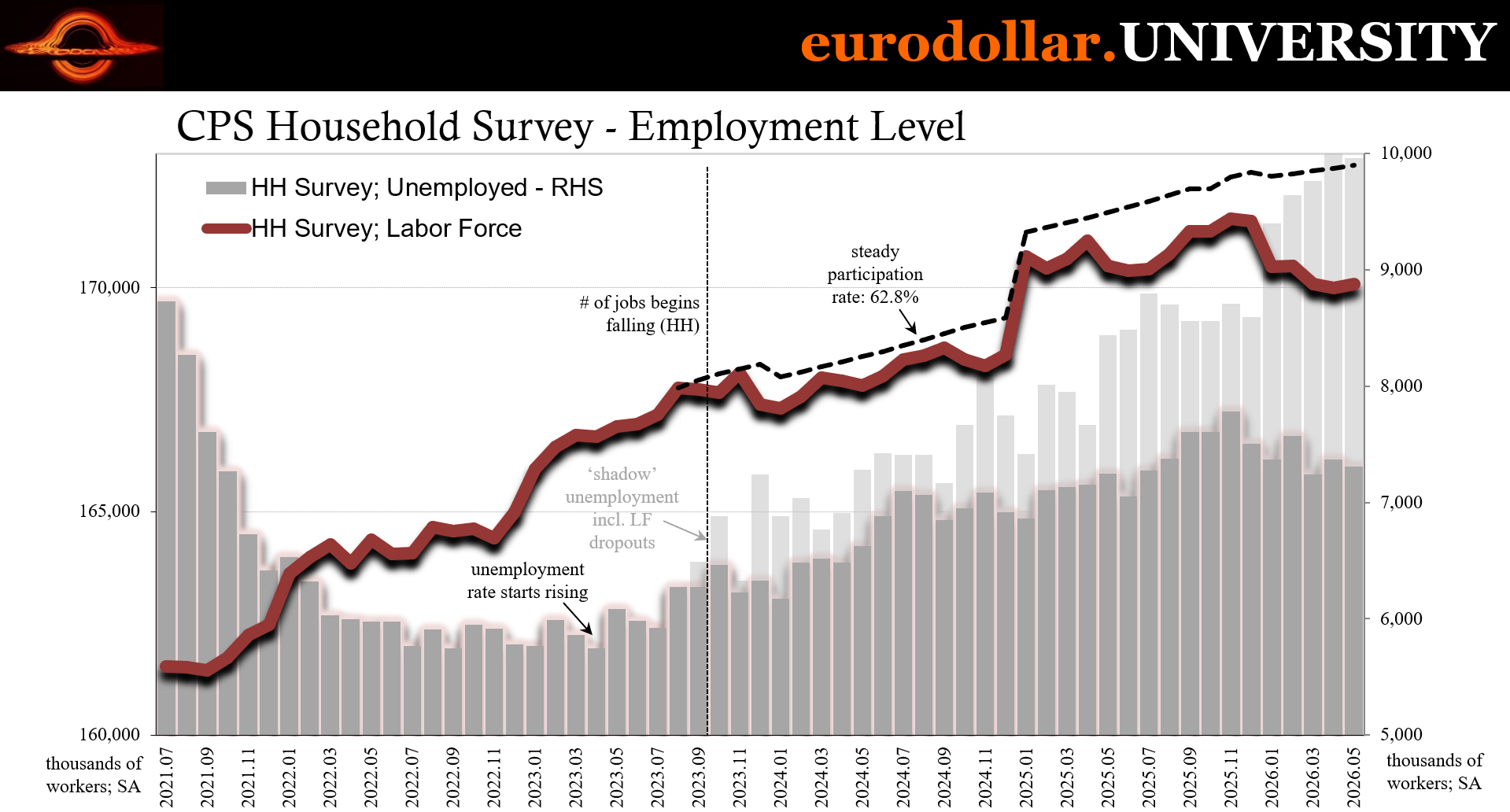
Consequently, employment conditions can weaken without producing a dramatic increase in the unemployment rate, building on the same problem with that metric seen since 2023 as well as throughout the entire 2010s after October 2008 (the participation problem). While not every decline in the labor force is cyclical, some lower participation should be expected as a matter of demographics, nevertheless, a central bank claiming labor-market resilience has an obligation to determine which explanation applies rather than treating a convenient headline as conclusive.
By not explaining the labor-force decline, the FOMC can preserve its preferred narrative claiming minimal employment gains are keeping pace with the available workforce. It’s a convenient way to also avoid having to account for near-zero job growth, which seems otherwise very important.
Since officially unemployment has changed little, therefore the labor market is steady even without noticeable payroll expansion. But this, as usual, a shift in the goalposts that cleverly avoids having to explain why the standards have changed. Before 2025, they all said negative payrolls would be a big problem. Now they claim those were fine since they weren’t negative enough given that the labor force participation declined at the same time.
The Fed sees falling participation as validating the lack of jobs and hiring when the lack of jobs and hiring has caused falling participation, particularly in the first half of 2026.
Financial markets are emphasizing precisely this omitted possibility. A stable unemployment rate combined with a substantial labor-force decline fits an economy facing fragility, at best. That interpretation is also consistent with subdued consumer-facing petroleum demand, declining real home values, uneven regional housing performance, and a bond market unified on the matter of “inflation risk.”
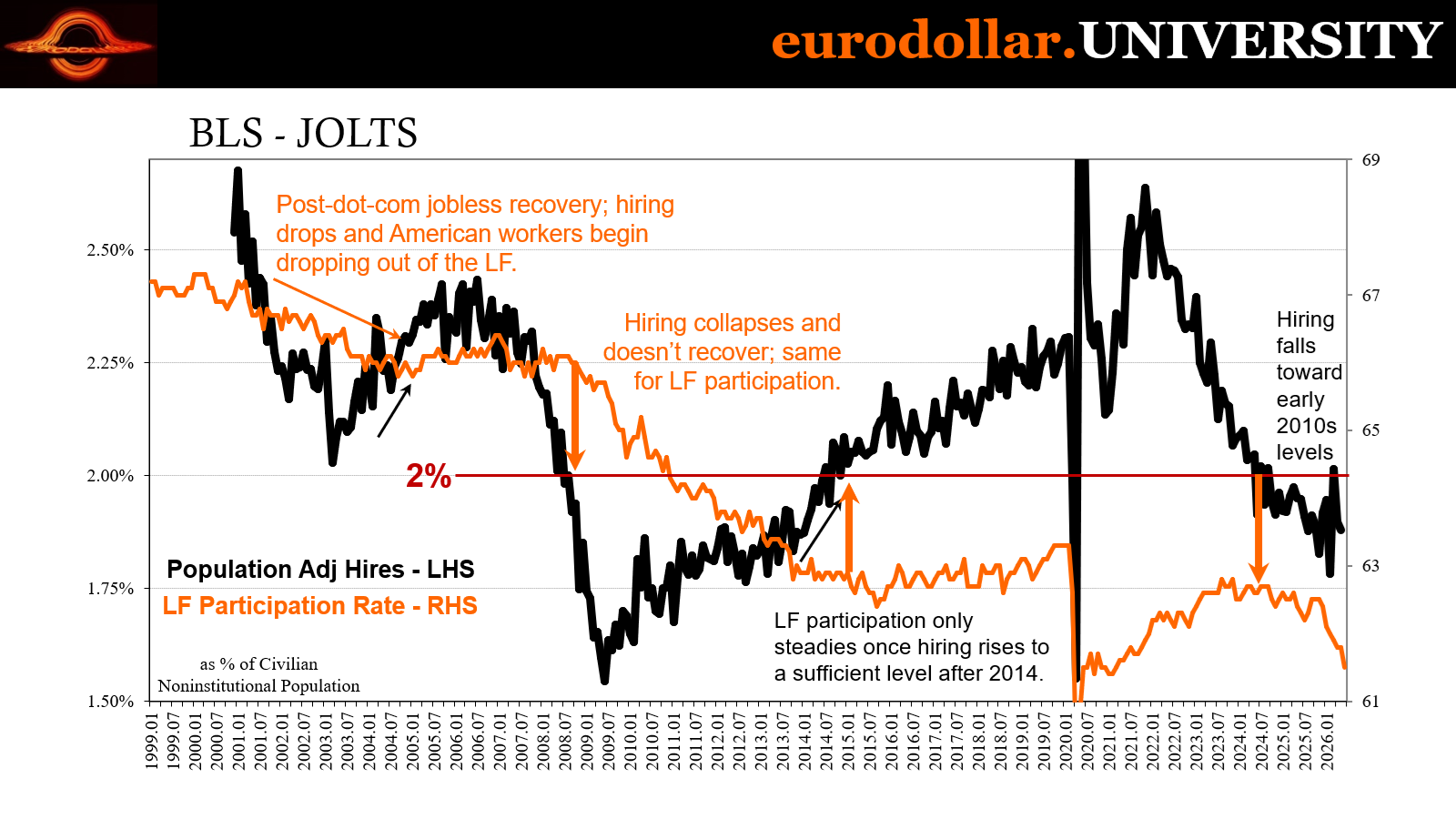
MORE CONSISTENT EVIDENCE THAT THE DECLINE IN LF PARTICIPATION ISN’T BENIGN, INSTEAD CONNECTED DIRECTLY TO MACRO AND CYCLICAL FACTORS, ALL OF IT OMITTED FROM POLICY CONSIDERATIONS (WE’RE AWARE OF)
And the labor question can’t be separated from the inflation question. Weak employment growth, reduced participation, and softer household demand limit the ability of firms to pass higher energy costs through the rest of the economy. That is the connection the FOMC partly recognizes but has not yet assembled into a coherent view.
The Committee correctly identifies energy as a sector-specific supply shock. It also sees a stable unemployment rate. What it has not sufficiently considered is that weakness hidden by falling labor-force participation may explain why the energy shock remains contained. An economy with genuine excess demand would display broad pass-through, accelerating wages, stronger final demand, and persistent inflation expectations. Instead, the evidence shows households and businesses absorbing the shock through reduced activity.
The missing second round
International evidence reinforces the narrow-shock interpretation. Energy-price increases have raised headline inflation in several advanced economies, but the expected second-round effects have repeatedly failed to materialize. The United Kingdom’s inflation rate slowed to 2.6 percent in June, its lowest in fifteen months, despite the earlier energy disruption. Canada and Japan have likewise shown that energy-sensitive headline indexes can remain elevated without producing an equivalent acceleration across underlying prices.
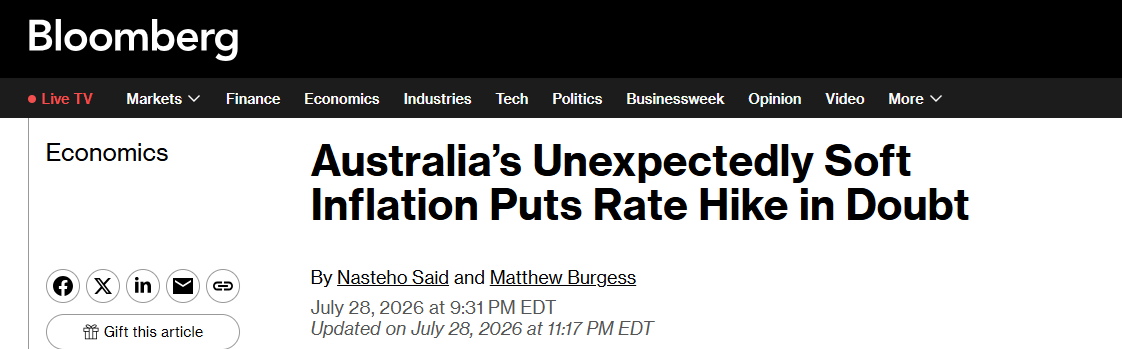


Australia’s latest consumer-price report is the newest example: inflation was softer than expected, pressuring the Australian dollar and changing expectations for RBA policy. If the energy shock were becoming a self-sustaining global inflation process, the cross-country data should be broadening rather than softening with particular emphasis on core indexes.
From Positive Economics to Coase’s warning
How did it get to be this way? One part of the explanation is what I covered in my June webinar. We all suffer from a lack of direct information about the state monetary system. Economists sought to recreate it working backward from macroeconomic conditions and data, therefore making large assumptions without adequately considering money as an important natural variable.
Eurodollar University uses market curves as a real-time proxy for what should be, by now, obvious reasons. The current energy inflation “debate” the latest such example.
The conflict between market evidence and central-bank forecasts is also rooted partly in the evolution of economic methodology. Econometrics did not literally begin with Milton Friedman; statistical economics and the formal econometrics movement predated his 1953 essay “The Methodology of Positive Economics.” Nevertheless, Friedman’s argument supplied an influential philosophical justification for the way modern policy models came to be used.
Friedman drew on John Nevill (Maynard’s well-known father) Keynes’s distinction between positive economics — what is — and normative economics — what ought to be. He argued that economic theories should be judged primarily by the precision and usefulness of their predictions, not by whether every assumption offered a realistic description of the world.
All models abstract. As George Box later summarized, “All models are wrong, but some are useful.” A simplified model could therefore be scientifically valuable if it reliably predicted the consequences of changing circumstances.
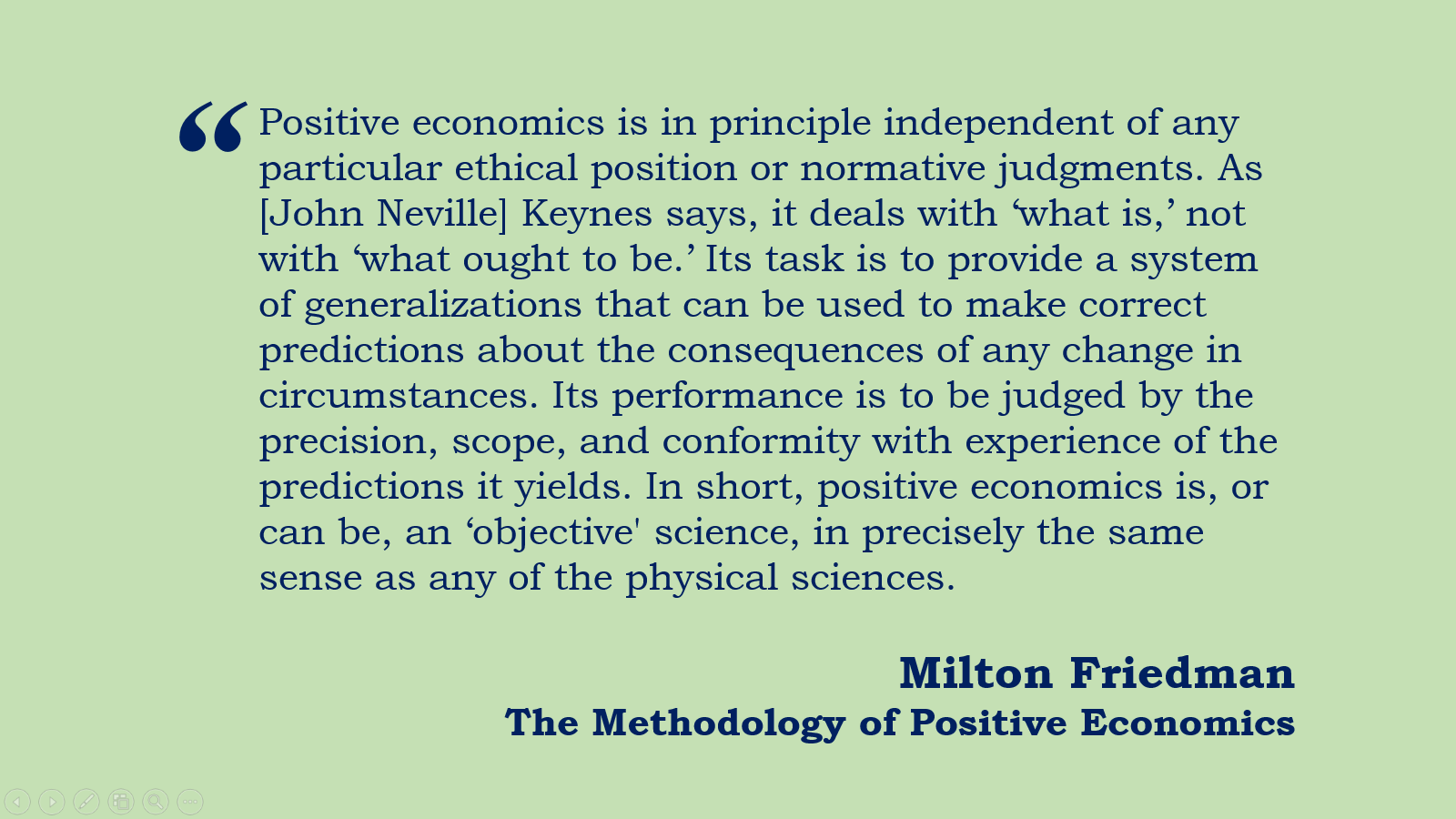
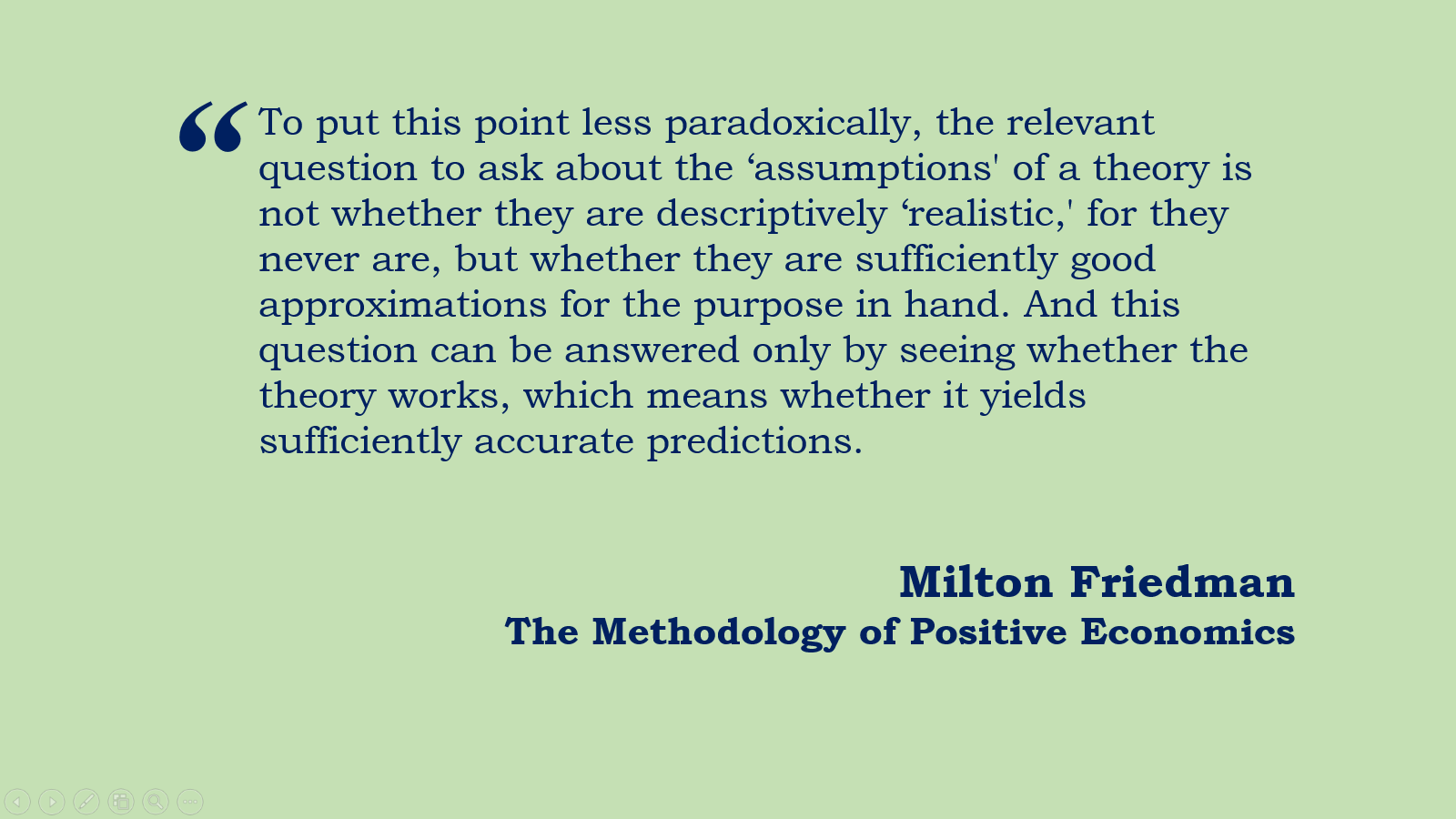
That was a good idea, properly understood. It was meant to impose discipline on what is erstwhile another “soft” scientific discipline. False or simplified assumptions could be tolerated only when the resulting theory worked. Failed predictions were supposed to trigger reassessment, replacement, or rejection. Positive economics didn’t provide permission to ignore reality; it made conformity with experience the decisive test.
Policy econometrics moved in the wrong direction when institutions preserved models despite repeated predictive failures. Central banks have often forecast inflation that never shows up, repeatedly dismissed market signals inconsistent with their outlooks, and then revised their narratives only after economic reality forced a policy reversal. The process typically begins with a modeled danger, proceeds through public warnings about inflation expectations, and ends with rate cuts once employment, credit, or output deteriorates.
Policymakers chase inflation ghosts in the media and eventually retreat because the evidence never validated the forecast. And this isn’t a problem limited to the past few years of oil price spikes. Alan Greenspan was chasing inflation in 1999 and the first half of 2000. Ben Bernanke nearly Trichet-ed the Fed in the middle of 2008. The entire second half of the 2010s, including the rate hikes under Yellen and Powell.
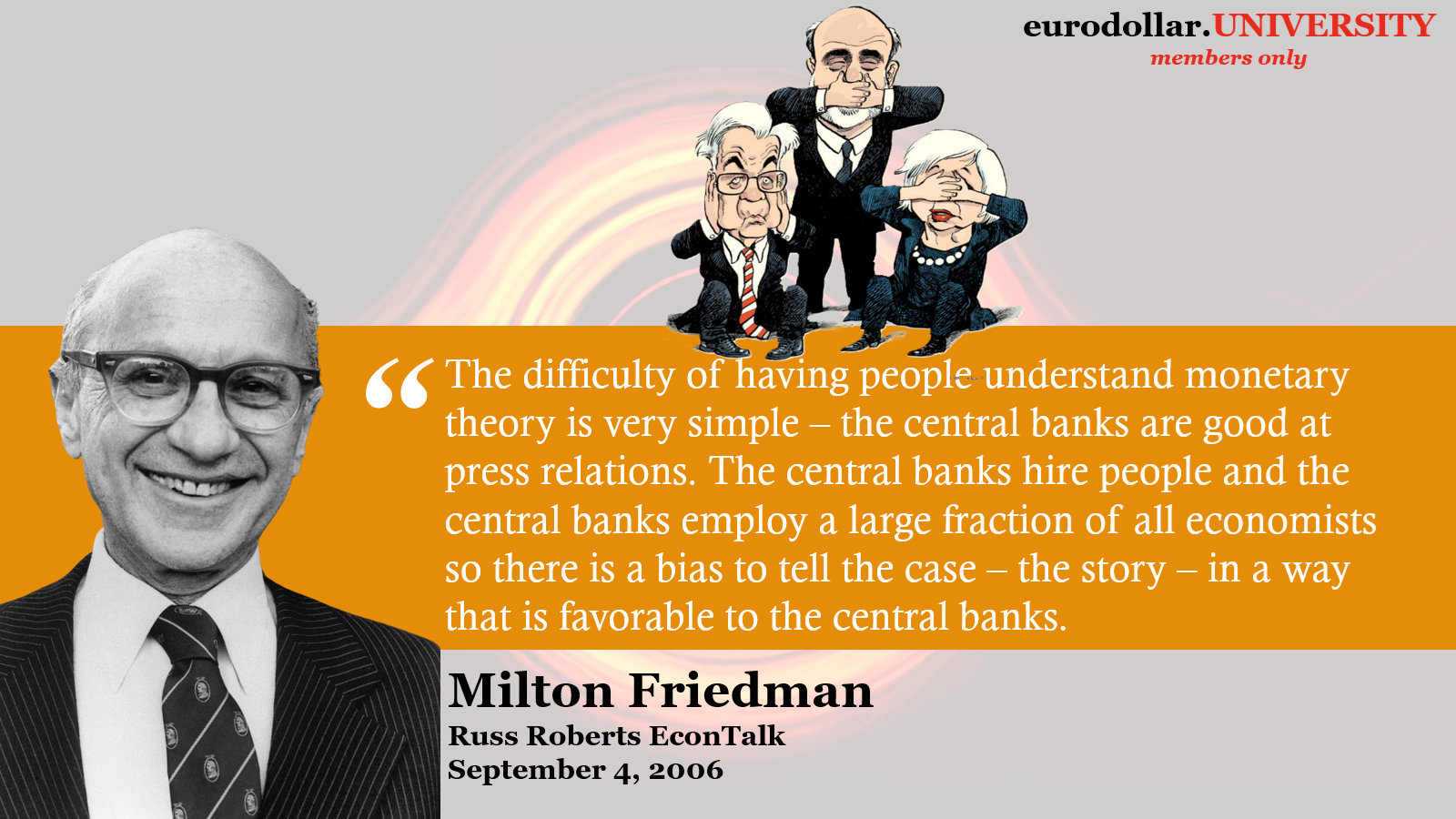
Friedman himself recognized the institutional danger. Central banks employ a large share of monetary economists and possess formidable public-relations operations. They can therefore frame policy outcomes in ways favorable to themselves: good conditions demonstrate the power of monetary policy, while bad conditions supposedly show how much worse events would have been without intervention. Such reasoning insulates models from falsification. Success proves the theory, while failure is reclassified as evidence of invisible success.

Ronald Coase’s critique went deeper. In his Nobel lecture, he warned that economics (read: Economics) had become increasingly abstract and could proceed without detailed knowledge of the actual economic system. Obvious institutional features — how firms operate, how markets transmit information, how contracts constrain behavior, and how financing really works — were omitted because they didn’t fit neatly into regressions not because they weren’t important in reality.
Economists acquired greater mathematical sophistication while losing contact with the processes their equations purported to describe. They are more adequately described as statisticians married to their numbers seeking to quantify the utterly complex rather than honest researchers interested in how an economy operates.
The present inflation debate is a classic Coase problem. A model may contain an energy-price variable, estimated pass-through coefficients, expected wage responses, and an inflation-expectations channel. But the actual system includes households cutting discretionary purchases, firms unable to pass through costs, workers lacking bargaining power, declining labor-force participation, weak fuel consumption, changing inventory behavior, and financial markets pricing a policy mistake.
Those details aren’t noise; they are the mechanism.
The lesson is not that models should be abandoned or that markets are always correct. It is that models must remain subordinate to observation. In this meeting, the FOMC’s inflation sentence passed that test better than its labor-market sentence. The former identified what has actually happened: a concentrated supply shock. The latter relied on a headline ratio without confronting the institutional and behavioral reasons its denominator had declined.
Coase would have urged policymakers to study the economic system underneath both statistics. Ironically, the fact current Chair Warsh slipped M2 money supply data into its report to Congress is itself a tacit admission that there “may” be some critical information missing in the Fed’s process.
Our three dissenters view the energy shock through the conventional central-bank framework: elevated headline inflation might spread, expectations might become unanchored, and preemptive tightening might therefore be necessary. All of those views are founded and shaped in econometrics. Markets reached the opposite conclusion based on economics.
TIPS breakevens have declined sharply, the yield curve before today flattened noticeably, oil’s forward structure slackened, and international inflation reports showed no evidence of a second round.
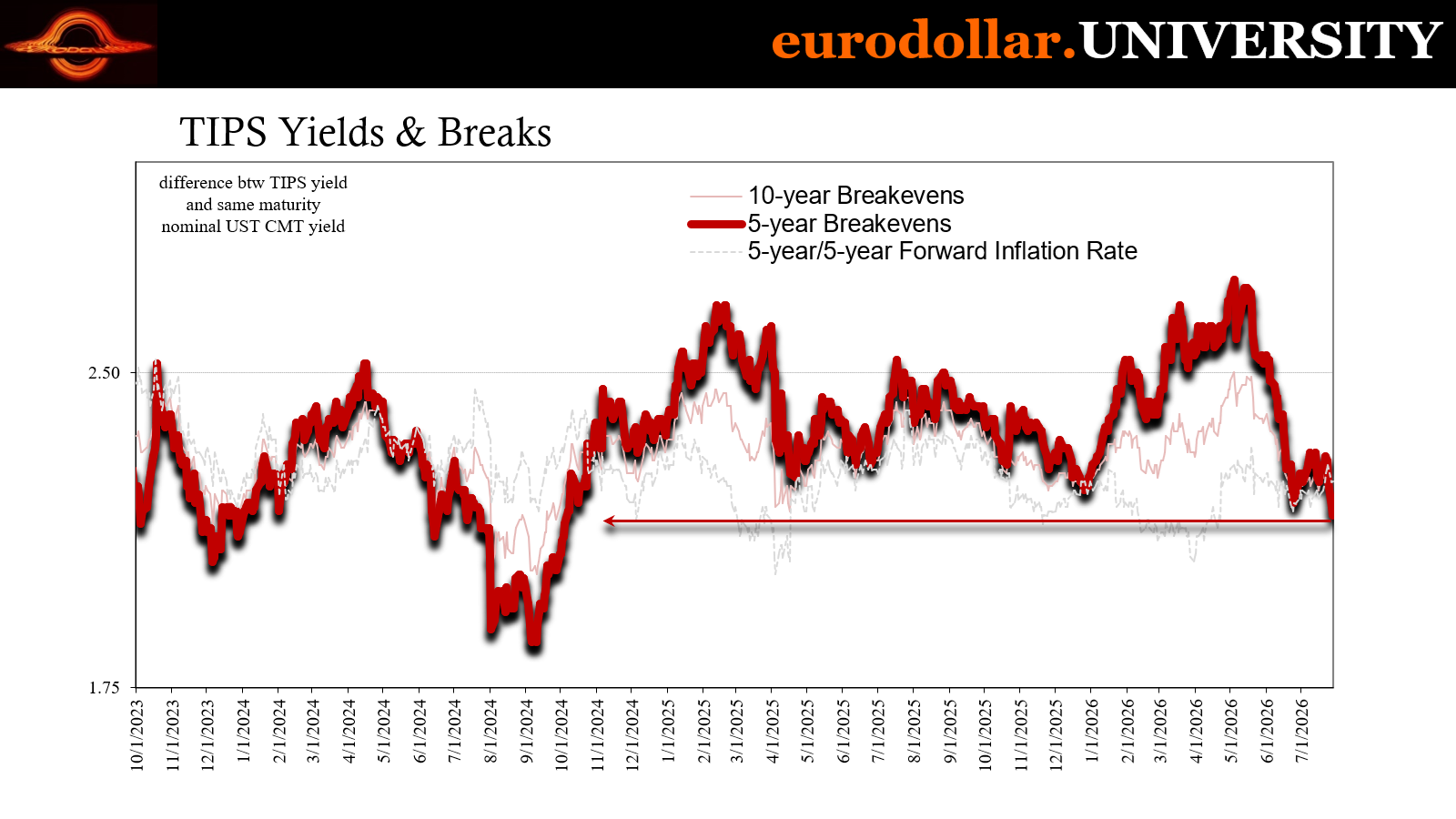
The Committee’s stripped-down statement captured half of this reality. Its inflation sentence correctly described elevated prices as partly the result of supply shocks concentrated in sectors such as energy. That wording distinguishes a relative-price event from persistent, generalized inflation. It suggests that a majority of the FOMC remains willing to follow evidence rather than automatically accept the output of models.
Its employment sentence was more problematic. Job gains may have kept pace with the workforce, and the unemployment rate may have changed little, but those observations refuse to explain why the labor force fell in the first place. Treating the unemployment rate as proof of resilience ignores the possibility that participation is declining because economic opportunities and demand have disappeared.
That weakness is not separate from the inflation outlook, it is critical to it.
The methodological stakes extend beyond one meeting. Friedman’s Positive Economics was supposed to judge theories by their predictive success. Coase warned that abstraction without knowledge of the real economic system would cause economists (now Economists) to overlook what was directly in front of them. Both standards point toward the same conclusion today: policymakers should respond to demonstrated inflation transmission, not merely to modeled possibilities.
Warsh’s bare-bones statement has at least clarified the dispute. The inflation risk is not what the dissents claim; it is that the FOMC might raise rates against an inflation process that never develops, only to cut later when economic reality finally overwhelms the model.
Econometrics – (true) Positive Economics = Halfway to Trichet