THE CONVERSATION TRADE
EDU DDA Aug. 19, 2026
Summary: Treasury buybacks are a limited market-liquidity tool being presented as something closer to yield-curve control, much as yen intervention relied on official reputation to magnify an operation that did not alter economic fundamentals. The more consequential development is the downturn in the credit cycle: private-credit non-accruals and defaults are rising, zombie companies are accumulating, refinancing and liquidity pressures are intensifying, and contingent risks are spreading into AI finance. Symbolic programs may redirect public attention temporarily, but realized credit losses will change both the economic outlook and the interest-rate conversation.
The buzz today was over two words: Treasury buyback. Few know what those words mean, but then again that’s the leverage and the purpose was the buzz. For some, they’re calling it QE-lite or even yield curve control. Those critics are actually doing the bidding of those they are criticizing simply because they have no idea what these things are, either.
I did a YT video on buybacks and their history. The one part I left out of it, which I’ll go into here, is the comparison to another Big News Recent Operation following a similar pattern: yen-tervention.
Treasury buybacks are supposed to suggest that Washington can manage its own interest-rate curve, redirect demand, and perhaps exercise something resembling yield-curve control. Neither operation changes the underlying fundamentals. At best, each can alter market positioning temporarily and, more reliably, persuade the media to change the subject.
The subject Washington would like changed is federal debt. A buyback sounds appealing, even when the Treasury must issue new securities to finance the repurchase of old ones. The stronger story, therefore, is not that government debt is out of control but that the government is skillfully controlling the Treasury market.
Meanwhile, the actual force shaping yields is becoming more visible. Private-credit losses are emerging, business development companies are reporting more non-accrual loans, lenders are marking down prominent software and services borrowers, and “amend and extend” arrangements are keeping thousands of private-equity-backed companies alive without restoring their viability. Wealth managers are retreating from supposedly semi-liquid credit products, refinancing walls are approaching, and off-balance-sheet guarantees are spreading into the artificial-intelligence boom.
Together, these developments describe a credit cycle moving decisively downward. That cycle—not Treasury theater—explains why yield curves remain unusually flat and spreads historically compressed. As credit stress intensifies, expectations for growth, inflation, and interest rates must fall with it. Symbolic intervention may briefly change the conversation; balance-sheet losses eventually change the economy.
Theater disguised as control
The term “buyback” invites a misleading comparison with a corporation repurchasing its own shares or retiring outstanding debt from excess cash. And that’s just the start. In the Treasury’s case, repurchasing an older security does nothing to reduce the government’s total indebtedness. Unless the federal government is running a surplus, the money needed to buy one bond must ultimately be obtained by issuing another obligation. The transaction can change the composition of the debt, but it does not repair the fiscal position that produced the debt.
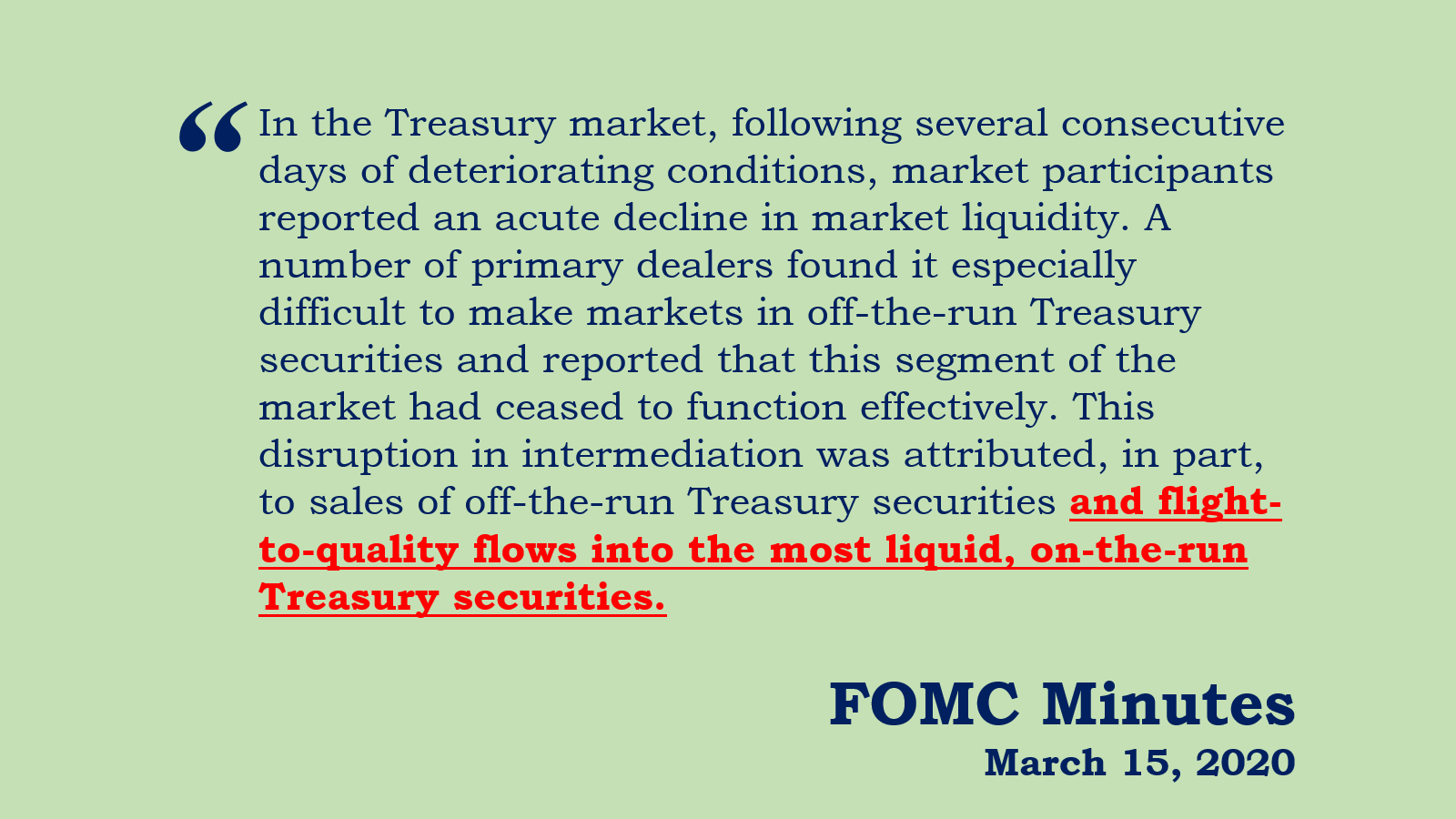
There are legitimate technical purposes for Treasury buybacks. Older, off-the-run securities sometimes trade less efficiently than newly issued benchmark securities. Purchasing them can improve liquidity in particular market segments, smooth cash management, and modestly reduce pricing distortions between issues. Those are useful but narrow debt-management functions. They are not macroeconomic control, and they certainly don’t give Treasury the ability to determine the general level of interest rates.
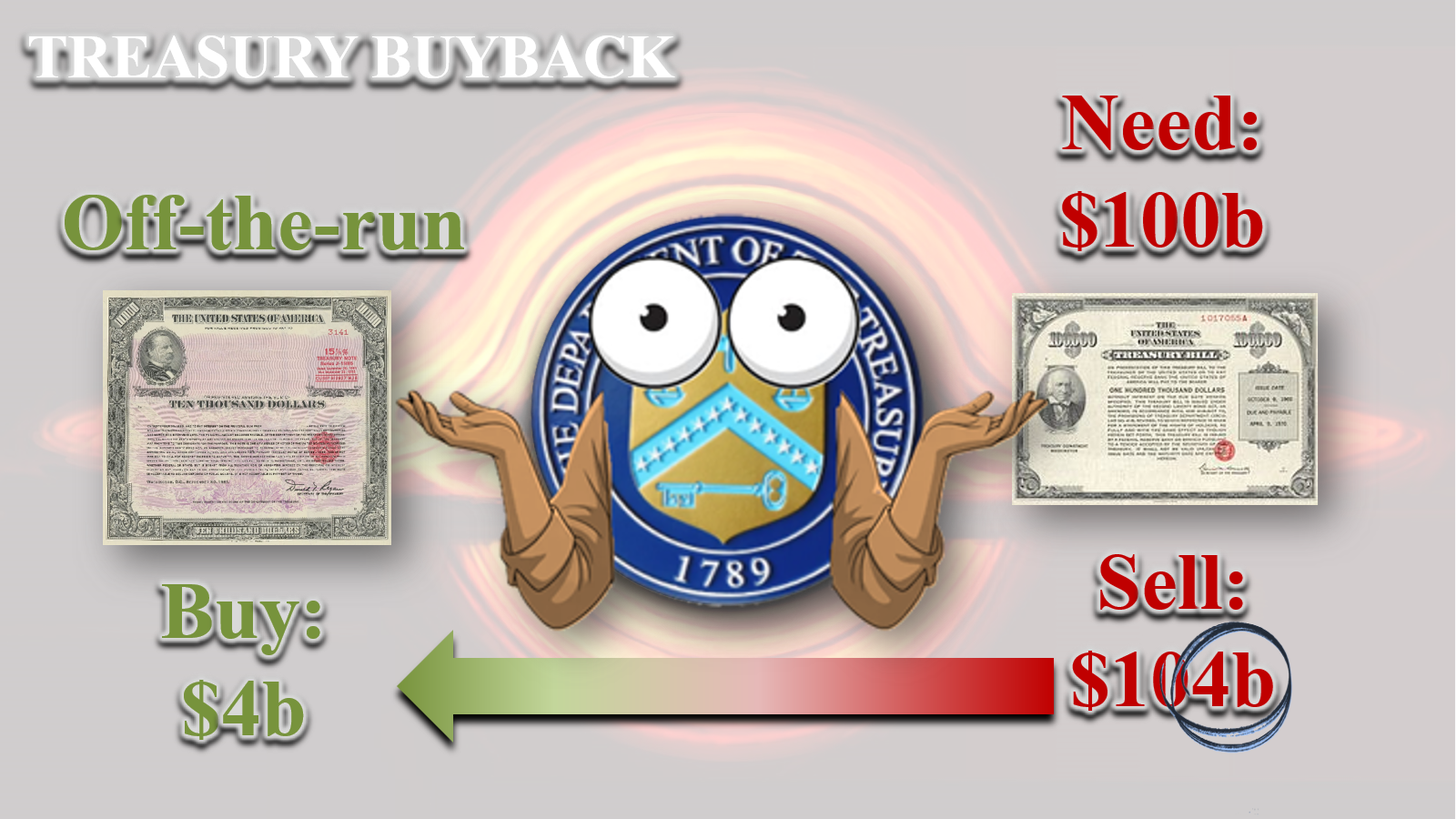
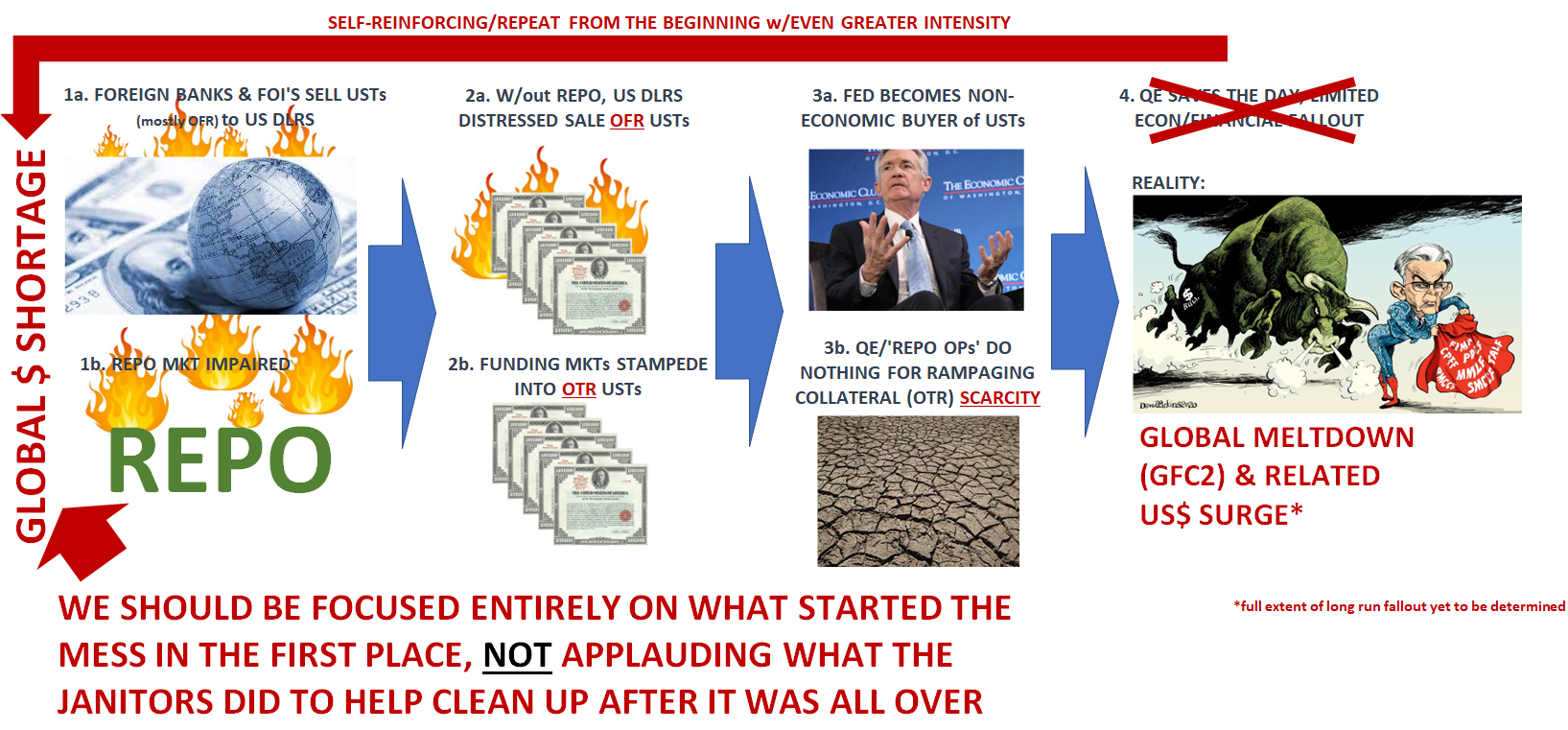
The effort nevertheless is at least thought to have considerable narrative value. Instead of discussing the relentless increase in federal borrowing, officials and financial media can discuss how “intelligently” the government is managing that borrowing. The image shifts from a debtor confronting a difficult market to an operator supposedly redirecting the market. The optics imply strength even where the mechanics reveal little more than shuffling deck chairs.
And it bears striking resemblance to the yen intervention episode. The underlying objective was not merely to purchase yen for a day but to change expectations by suggesting that Tokyo and Washington could act repeatedly and in coordination, making a limited intervention appear potentially unlimited. Traders were supposed to fear the reputations and resources of both governments. However, once the transactions ended, fundamentals remained.
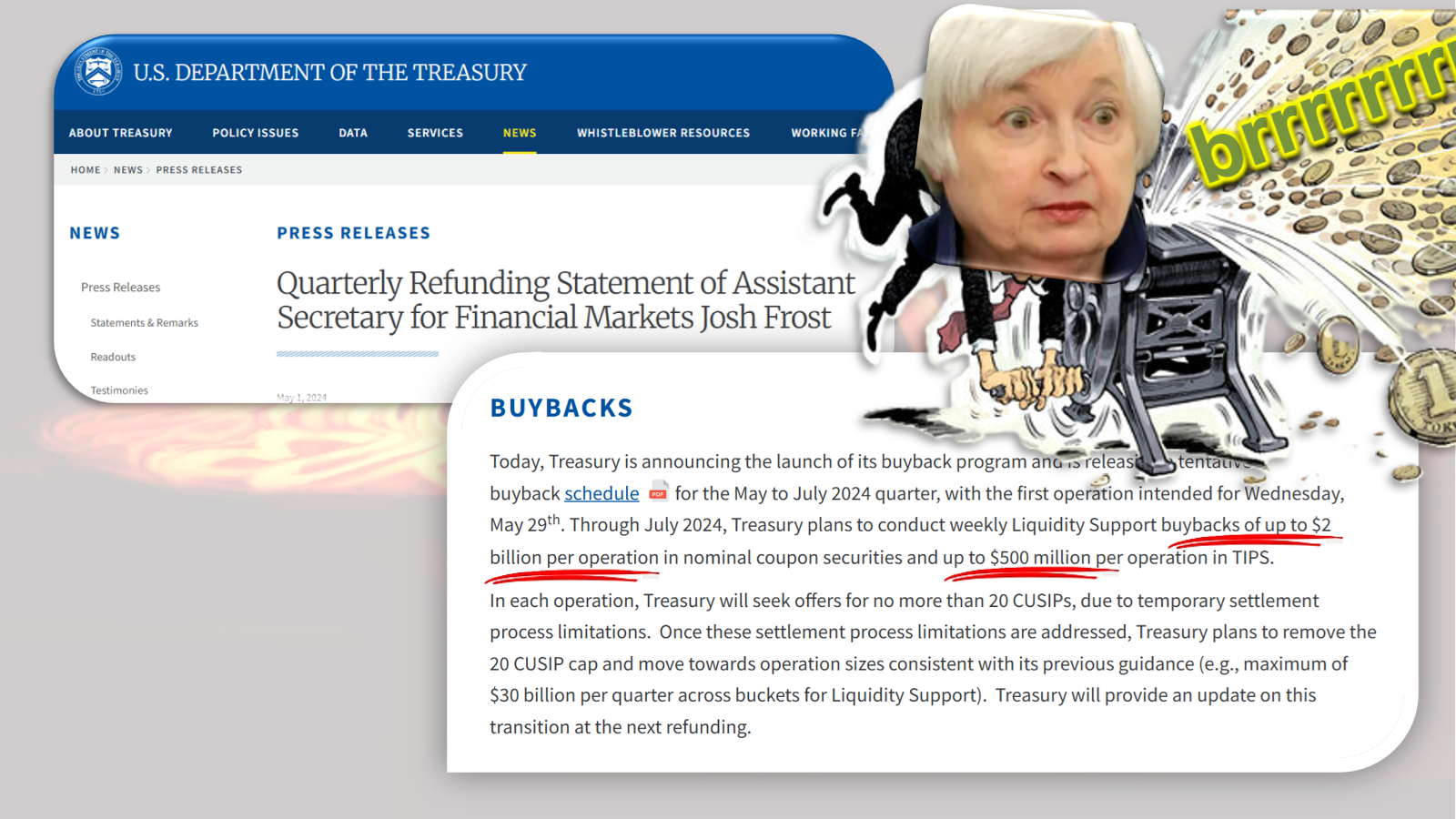
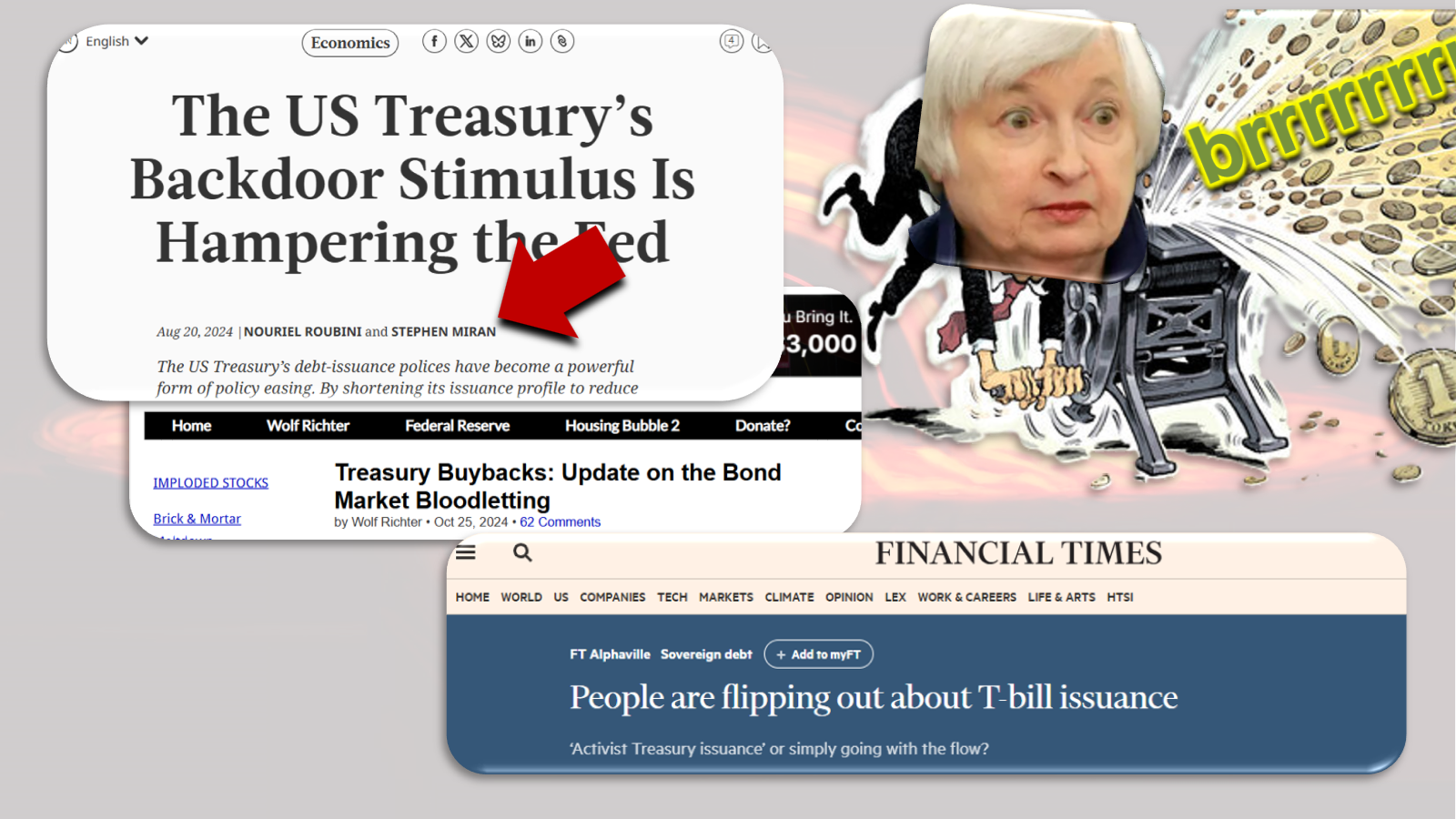
Treasury buybacks face the same limitation. Market participants may respond briefly to altered supply, official signaling, or the possibility of follow-up operations. And all this ignores the relevant fact Treasury has been conducting these buybacks for two solid years already. Since May 29, 2024, the government has been authorized to buy up to $2 billion in coupons and $500 million in TIPS.
All that changed today is now beginning early September the authorized limit will double for coupons to $4 billion. There is yield curve control at $4 billion that wasn’t there at $2 billion? Come on.
The truth is, again, no one knows this fact. The announcement is the entire thing counting on the understandable ignorance of the public – and the critics – to make mountains out of narrative molehills.
None of which changes the chief problem facing the bond market, at least in the short run. As discussed here and here, the reason rates are rising is simply the Federal Reserve Trichet risk standing in the way of bull steepening.
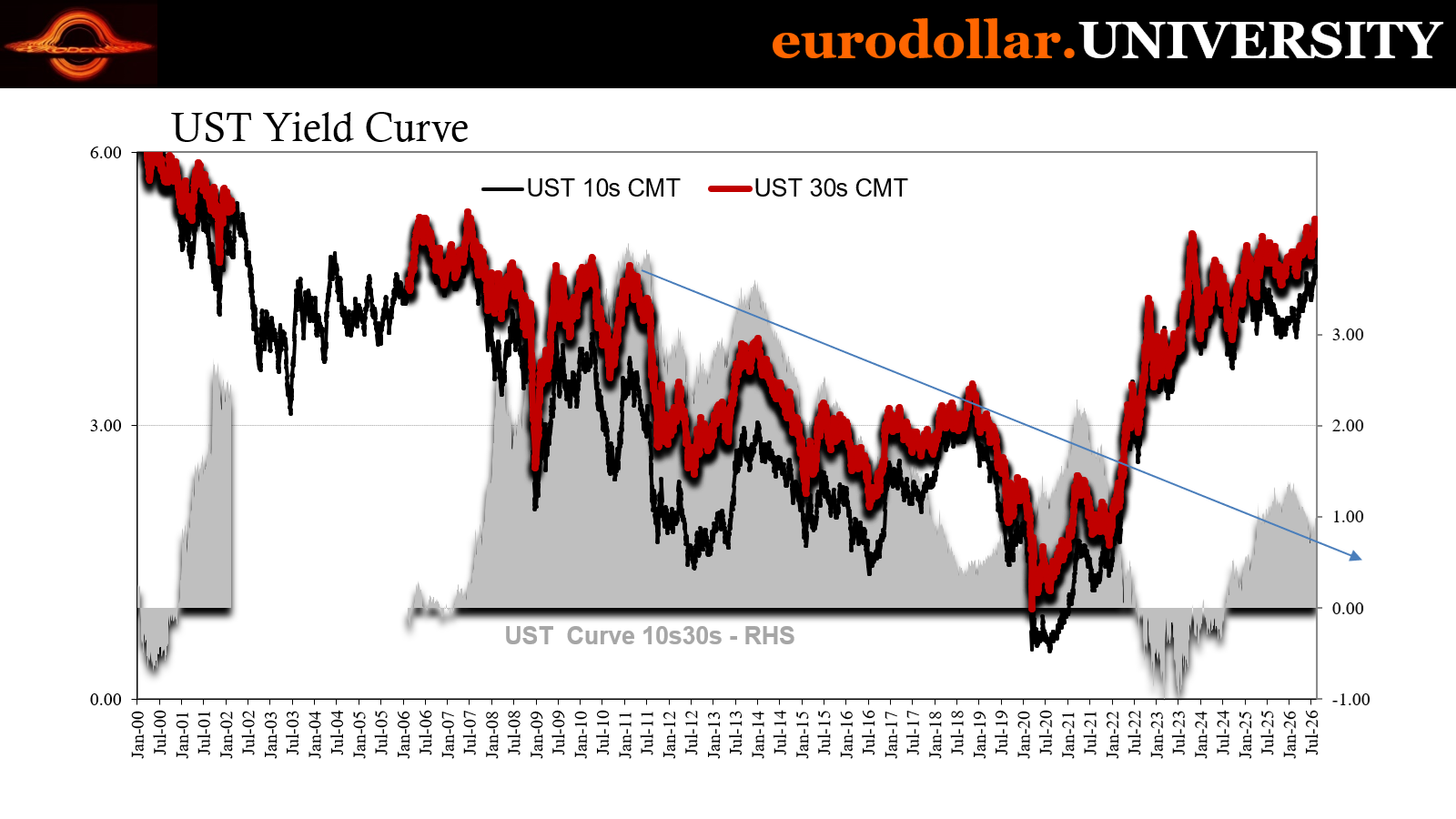
Since that has pushed the 30-year rate (gently) to a 19-year high, it has become front page news (or trending on social media). Naturally, in the pitch black of Economics’ ignorance, the small increase in long-term bond rates gets connected with the $40 trillion in national debt outstanding to create a story of debt markets breaking for what otherwise appears to be a plausible reason.
The government would like to change that narrative. That’s it, that’s the buybacks.
Its clearest success is therefore editorial not financial. The program can generate stories about liquidity support and implied curve management rather than debt accumulation and fiscal deterioration. But getting the press to change the subject is not the same as getting the bond market to change its shape.
Treasury is far more likely to get it what it thinks it wants, but increasingly for reasons nobody would sign up for. Again, historically flat curve and low spreads don’t scream for a buyback program doubling in size, they shout about inevitable Pringles and credit cycle recognition, and not just in narrative or even accounting form.
Losses are finally coming out
For years, private credit was presented as an escape from the traditional credit cycle. Direct lenders could negotiate privately, avoid public-market volatility, maintain close relationships with borrowers, and restructure troubled loans without the disruption associated with syndicated markets. Because loans didn’t trade every day, reported values appeared stable. That stability was often mistaken for safety when it was partly the product of infrequent pricing, not to mention bubble conditions.
The Financial Times now reports that stress is spreading through private credit portfolios, with large funds taking writedowns and warning about problem loans. Current data show troubled-loan levels among major private-debt investors returning to territory last seen in 2017. For the 20 largest publicly traded business development companies, loans on non-accrual status increased to a median 2.8% of cost during the second quarter, up from 2% at the end of March.
Non-accrual status means that payments have stopped or that collection has become sufficiently doubtful that the lender can no longer recognize interest normally. It is effectively a loan that will have to be converted into some loss.

This is not merely a statistical deterioration. Fitch Ratings reported that private-credit defaults reached a record in July. Major listed BDCs contracted again during the second quarter as impairments mounted and loan repayments or sales exceeded commitments to new deals. Vehicles associated with KKR, Blue Owl, and Apollo’s MidCap Financial were among those where repayments outpaced new lending. FS KKR Capital reported that 7.1% of its loan portfolio was troubled, far above the broader industry average.
Specific cases make the direction unmistakable. Blackstone and KKR marked down loans to software company Medallia after owner Thoma Bravo handed the business to lenders. One Blackstone fund valued its exposure at less than 50 cents on the dollar at the end of June, down from 60 cents in March. Ares reduced the value of its loan to Cornerstone OnDemand. Blackstone and KKR also assumed control of dental-services company Affordable Care following a default.
These are no longer hypothetical vulnerabilities buried in stress tests. Ownership is changing, principal is being impaired, and losses are being recognized.
Much of the damage traces back to loans of the 2020 and 2021 vintage, no surprise. This was the “boom” era, the point of maximum bubbliness replete with unqualified and unchallenged growth projections “justifying” large amounts of leverage. Private-credit loans commonly carried floating rates, meaning the subsequent increase in short-term benchmarks raised borrowers’ interest expense automatically. Companies initially purchased at aggressive valuation multiples then had to devote increasing portions of their cash flow to debt service.
This dynamic creates deterioration even before a formal default. A company can remain current on interest while becoming progressively weaker: capital expenditure is delayed, hiring slows, product development is reduced, and competitiveness erodes. Today’s apparently performing loan can therefore become tomorrow’s restructuring precisely because the effort to keep it performing has deprived the borrower of growth.
Had it defaulted on its past loan, maybe that would have given it the space to wiggle out from under forgot-how-to-grow. No one wanted to book the loss always believing forgot-how-to-grow would soon enough remember how to be resilient. That simply never happened and both lender and borrower lost a lot more than time.
Opacity delayed recognition but couldn’t eliminate the cycle. Publicly traded loans are marked continuously, often forcing markets to acknowledge distress quickly. Private lenders can negotiate waivers, capitalize unpaid interest, postpone maturities, or use valuation models that adjust gradually. These options spread recognition over time. They may prevent disorderly liquidation, but they can never transform inadequate cash flow into sufficient cash flow.
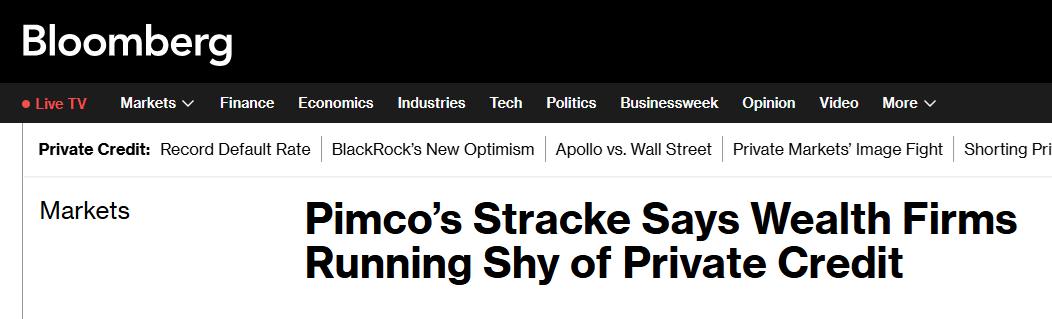
Industry leaders are now saying openly what had previously been minimized. Golub Capital co-chief executive David Golub, for example, described “elevated credit stress” and stated plainly: “We’re in a credit cycle.” Oaktree’s credit arm is conserving capital and maintaining a more defensive, risk-averse posture in anticipation of greater volatility. This behavior matters as much as the public warnings. When experienced lenders preserve liquidity instead of expanding commitments, credit availability tightens for borrowers already dependent on refinancing.
The private-credit model has not repealed the credit cycle. It has lengthened the interval between deterioration and recognition. The losses now appearing are evidence that this interval is ending.
From Zombieland
The next stage extends beyond isolated defaults. PitchBook identifies 3,332 potential “zombie” companies among 13,509 private-equity-backed businesses in US sponsor portfolios. These firms have been held for at least five years and have completed no transaction since the end of 2021. General partners are also sitting on more than $860 billion of buyout net asset value in funds older than seven years. Assets intended to be acquired, improved, and sold have instead become trapped in aging structures without plausible exits.
Yes, losses are coming.
The same financial engineering that supported the zero-rate buyout boom now functions as life support. Lenders amend terms, extend maturities, defer interest, or permit payment-in-kind arrangements that add unpaid interest to principal. Such measures can be reasonable when a viable company faces a temporary liquidity problem. Applied repeatedly to overleveraged firms with weak growth, however, they become a wager that future conditions will somehow validate an obsolete capital structure; that remembering resilience isn’t just some long lost pipedream.
Covenant erosion makes the reckoning easier to postpone. Covenant-light loans now account for an eyepopping 92% of outstanding leveraged loans, according to PitchBook, compared with 16% in 2009. Lenders have fewer contractual triggers with which to demand corrective action before a borrower exhausts its flexibility. Problems can remain hidden longer, but resolution becomes more difficult when it finally arrives. Less discipline early in the process can mean greater impairment at the end.
The refinancing calendar adds urgency. PIMCO President Christian Stracke has warned of a long pipeline of problem loans inside some BDCs, particularly software loans maturing in 2027 and 2028. Markets aren’t going to wait for the refinancing cliff; in many ways, they’ve already tried to get to the exits this year, in case you hadn’t heard (redemptions).
The software sector faces an even larger wave thereafter, with S&P Global Market Intelligence estimating that $386 billion of syndicated loans will mature during 2028 and 2029. Many of these debts were created when recurring software revenue was treated as nearly invulnerable and valuations assumed continued rapid growth. Borrowers now approach refinancing with higher rates, weaker operating assumptions, and lenders less willing to overlook risk.
Funding pressures are also appearing on the investor side. Wealth managers are retreating from private-credit vehicles after several direct-lending funds imposed unexpected exit restrictions. Some distributors have begun replacing reassuring labels with the more candid term “semi-liquid,” acknowledging that periodic redemption opportunities can disappear when too many investors want their money simultaneously.
When the funds themselves have to workshop better marketing for their products, it tells you in no uncertain terms just how toxic their products have already become; well down the road into toxic waste.
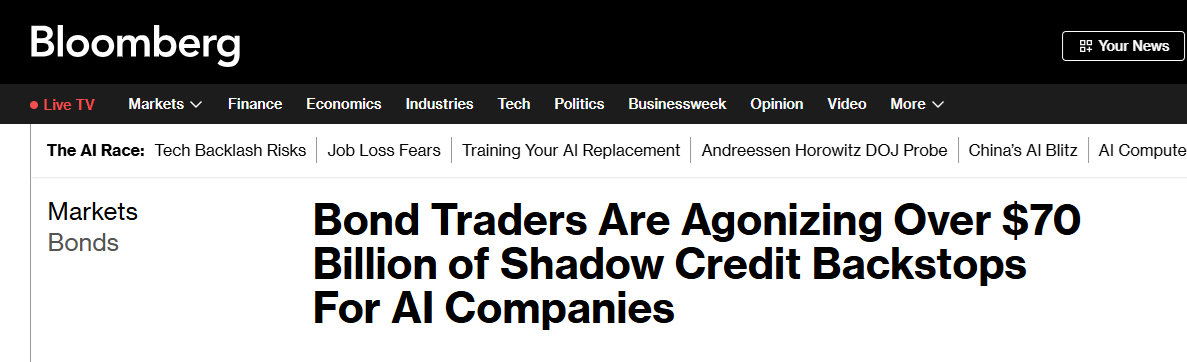
The thing is, despite perceptions to the contrary the cycle is no longer confined to conventional private credit. Artificial-intelligence infrastructure finance is accumulating its own shadow obligations. Special-purpose vehicles can borrow to purchase chips and equipment, relying on lease or service payments from technology users. If the user stops paying, the assets must be released or sold; if those proceeds are insufficient, a residual-value guarantor covers the shortfall.
Estimates suggest roughly $70 billion of such potential liabilities may sit outside major AI companies’ reported balance sheets, and those are early estimates based on very incomplete figures and assumptions. Nvidia stands in the middle of a lot of it, which further implicates its previously discussed $500 billion Wall Street financing hope.
These guarantees look inexpensive during a boom because demand for computing equipment is strong and asset values appear secure. In a downturn, however, used chips and specialized infrastructure may be worth less precisely when customers are defaulting. A residual-value guarantee is effectively a put option written against the cycle: harmless while prices rise, but potentially expensive when earnings, collateral values, and customer credit quality weaken together. It is pro-cyclical financing layered onto an already concentrated capital-expenditure boom.
No wonder the edges of the credit markets, from spreads to CDS, are looking more than a little rough these days.
All these developments help explain the yield curve. Flat curves and compressed long-term spreads are not evidence that Treasury has achieved covert yield-curve control. They indicate that markets simply don’t expect today’s high short-term rates to survive a deteriorating credit environment. As defaults rise, lenders become defensive. As lending contracts, investment and hiring weaken. Softer employment and spending then reduce nominal growth and eventually force short-term rates lower.
The curve is therefore describing the credit cycle before official policy acknowledges it. The worse credit becomes, the less credible forecasts of sustained rate increases become—at either the short or long end. Treasury buybacks may influence selected securities for limited periods, but even that’s highly dubious. Credit contraction changes the expected path of the entire economy.
The Treasury buyback program should be judged according to what it can actually accomplish. As a technical debt-management operation, it may modestly improve trading conditions in less-liquid securities and assist with cash management. Those limited benefits hardly amount to control over interest rates, reduction of the federal debt burden, or a reversal of the economic forces expressed in the yield curve.
Its broader purpose is entirely symbolic. Like coordinated yen intervention, the program asks markets to extrapolate from a limited official action to the possibility of something larger. Policymakers hope reputation will magnify scale, expectation will substitute for economic change, and the appearance of control will influence behavior. Yet neither foreign-exchange intervention nor bond buybacks can permanently override interest-rate differentials, financing needs, weak growth, or deteriorating credit quality.
Private credit presents the opposite kind of force. It does not need a communications strategy because it operates through cash flow and balance sheets. Non-accruals are increasing. Defaults have reached records. Loans are being written down, companies are being transferred to lenders, and BDCs are reducing new commitments. Thousands of aging private-equity investments remain trapped without exits, while amend-and-extend strategies postpone rather than resolve their underlying problems. Wealth managers are confronting liquidity mismatches, software borrowers face a substantial maturity wall, and AI finance is creating contingent liabilities that may become most expensive during a downturn.
These are the mechanisms through which a credit cycle becomes an economic cycle. Interest payments crowd out investment. Refinancing becomes more expensive or unavailable. Lenders preserve capital. Businesses reduce hiring and expenditure. Investors demand liquidity. Eventually, declining demand and weaker income growth overwhelm concerns about perpetually rising rates.
That is why the flat curve makes sense. It is not proof of government strength but an expression of market skepticism. Long-term yields refuse to validate the idea that high short-term rates, strong nominal growth, and persistent inflation can continue indefinitely while credit quality deteriorates underneath them.
Washington’s buyback gambit may succeed in changing headlines from uncontrolled debt to sophisticated debt management. It cannot change the underlying conversation for long. The credit cycle will do that more durably. As losses migrate from private marks to public disclosures, restructurings, reduced lending, and weaker economic activity, the debate will move away from how high rates might rise. It will turn instead to how quickly they must fall—and how much damage will already have occurred before they do.