THE MANDATE HIDDEN IN THE CURVE
EDU DDA Sep. 1, 2026
Summary: July JOLTS featured the third worst hiring rate of the last half decade, falling quits, declining worker confidence, and a third month of negative net turnover, all of which warn of labor-market deterioration ahead of the August payroll report. A flat Beveridge curve allows that weakness to appear as labor-force withdrawal rather than higher official unemployment. Against this background, the Fed is falling short of its three statutory goals – yes, three. The July JOLTS offer more consistent and compelling evidence for that case.
Fed Chair Kevin Warsh jolted the markets Friday with his Jackson Hole speech, only to have his message jolted right back by July JOLTS. The central point of contention remains labor, not inflation. And with the bond market caught in between, that puts all three of the Federal Reserve’s mandates on the dock.
Yes, three.
If anything, it’s the third one which is now speaking the loudest, a chorus joined by even more labor data which thoroughly refutes the mainstream message. The July JOLTS report presents a labor market that is fragile rather than resilient. Job openings rose modestly, but only after a major downward revision to June. More importantly, hiring fell below 5.1 million, quits declined sharply, and net turnover — the difference between hiring and the principal forms of separation — was negative for a third consecutive month.
IT’S NOT EVEN CLOSE, THIS IS AN EITHER/OR SITUATION
Those flows are incompatible with the reassuring story told by a low unemployment rate. Workers aren’t confidently moving among abundant opportunities; they are holding on to existing jobs or leaving the labor force when new employment proves difficult to locate and obtain. Because the official unemployment rate excludes most labor-force dropouts, it can remain deceptively low even while payroll growth, participation, hiring, and worker mobility deteriorate.
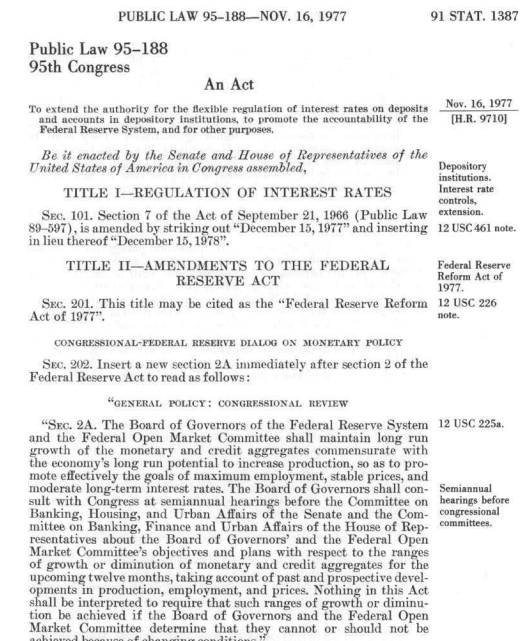
The issue reaches beyond one employment release. It goes to the Federal Reserve’s trio of statutory objectives: maximum employment, stable prices, and moderate long-term interest rates. Their history runs from the political response to the Great Depression through the Employment Act of 1946 and, most decisively, the congressional reforms of the inflation-ravaged 1970s.
Today, the Fed is focused on allegedly persistent inflation, even as supply shocks complicate the price data, hiring weakens, and a flat, potentially re-inverting yield curve warns of instability to all three of the obligations. If moderate and stable long-term rates follow from success on employment and prices, then the curve today has bad news for Warsh: something upstream isn’t going the right way and it’s not what Trichet thinks.
JOLTS-ed disappearance of labor-market resilience
What the mainstream takes from JOLTS is mainly the heavily flawed, highly inaccurate job opening series. Its July headline number was an increase of 89,000 job openings to 7.271 million. Taken in isolation, that might appear mildly encouraging yet becomes far less impressive after June’s openings were revised downward by 177,000 to roughly 7.2 million. July’s increase was also smaller than expected. Even job openings, the most generous and potentially overstated measure of labor demand, show that demand is far from stable.
Openings are little more than intentions, advertisements, or reported positions. They sure aren’t completed employment transactions. Vacancies may be duplicated, left online after plans change, maintained perpetually to collect résumés, or reserved for applicants possessing qualifications employers are unlikely to find at the offered wage (ghost listings).
Hiring is different. A hire is where expressed demand meets an actual worker, agreed compensation, and a start date. That makes hiring the more consequential measure.
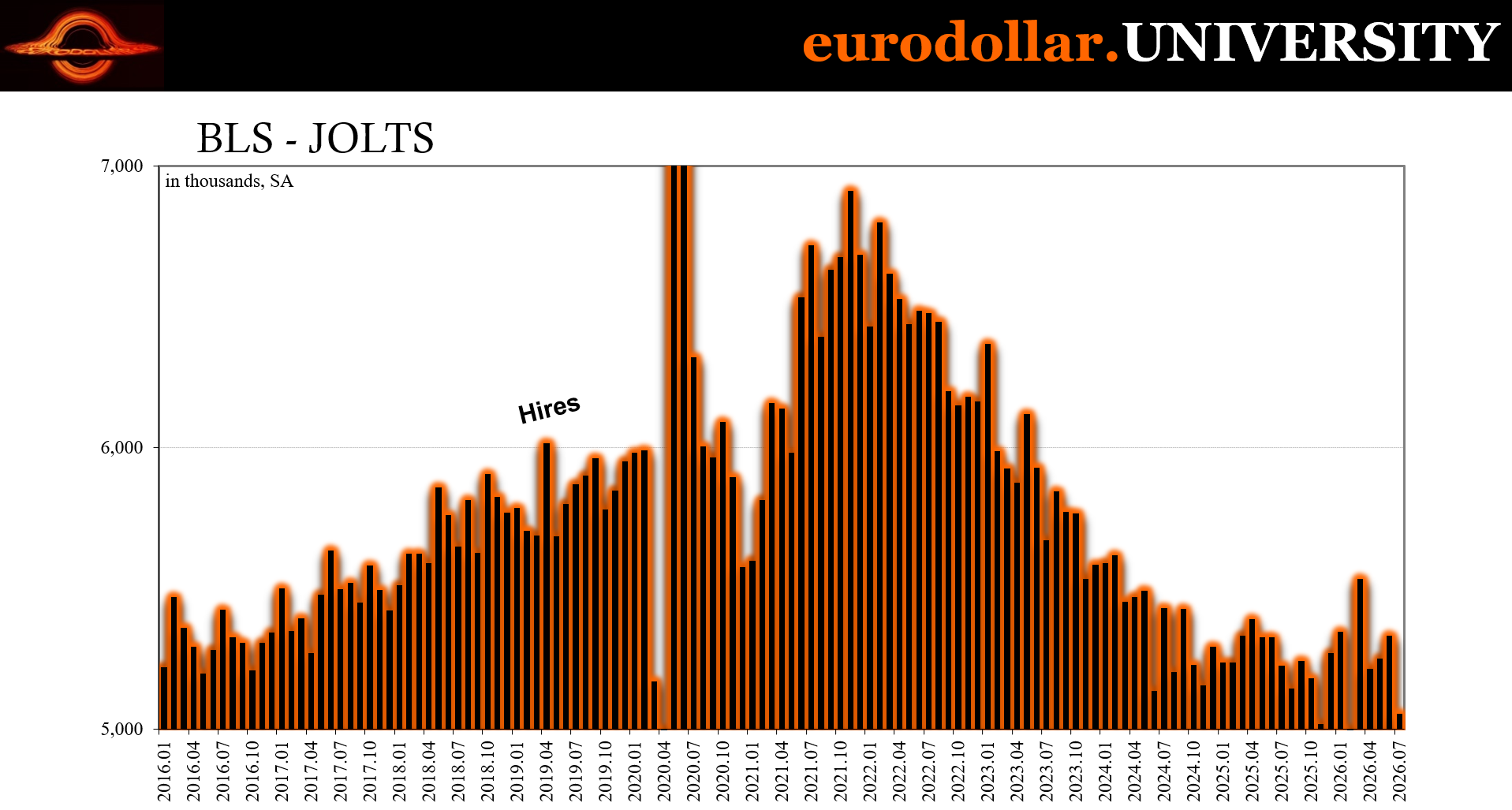
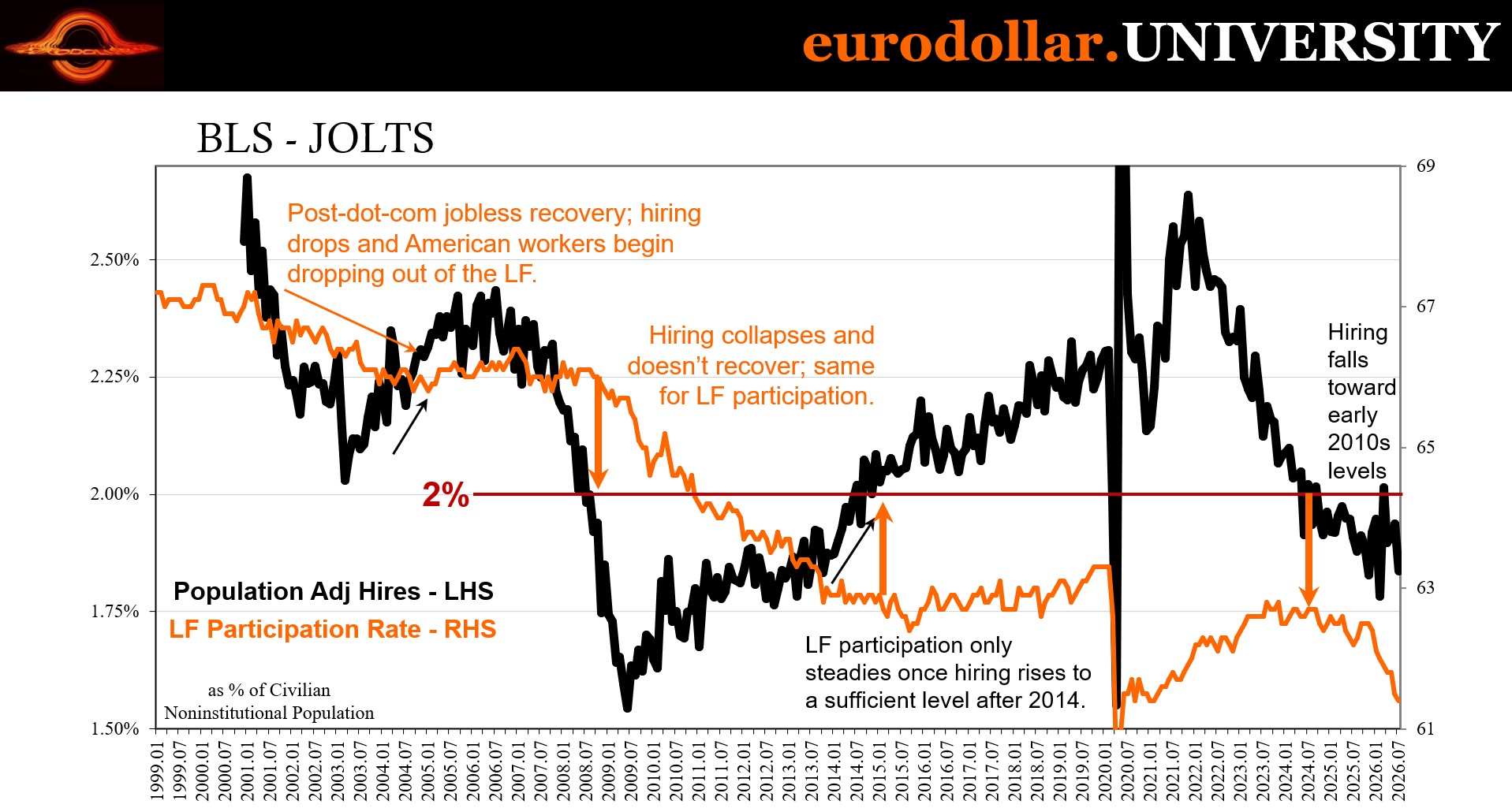
July’s hires fell below 5.1 million, the third-weakest result of the entire cycle. Worst, the hiring rate was only 1.84%, remaining well below the rough 2% threshold associated with changes to participation. The exact threshold is less important than the direction and persistence: employers have become much less willing to convert vacancies – however many in reality there might be – into employees.
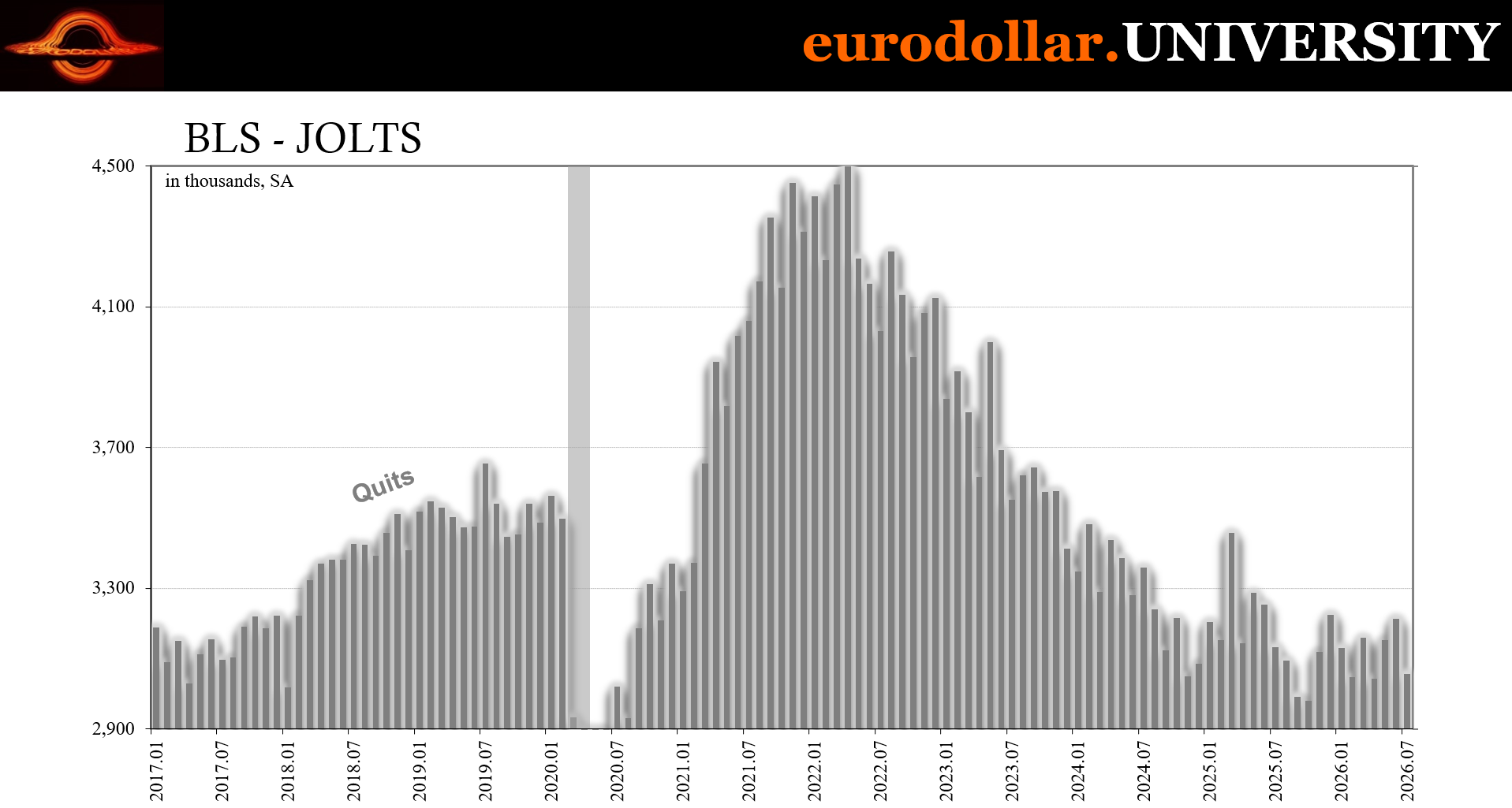
Quits reinforce the message. They fell by 157,000 to 3.06 million, lowering the quits rate from 2.0% to 1.9%, close to its lowest level since 2020. Quitting is an expression of confidence so a check on hiring. Workers voluntarily leave when they expect another job to be available, better, or quickly obtainable. When quits decline, workers are effectively revealing that advertised opportunities aren’t being trusted, or, more likely, they don’t truly exist.
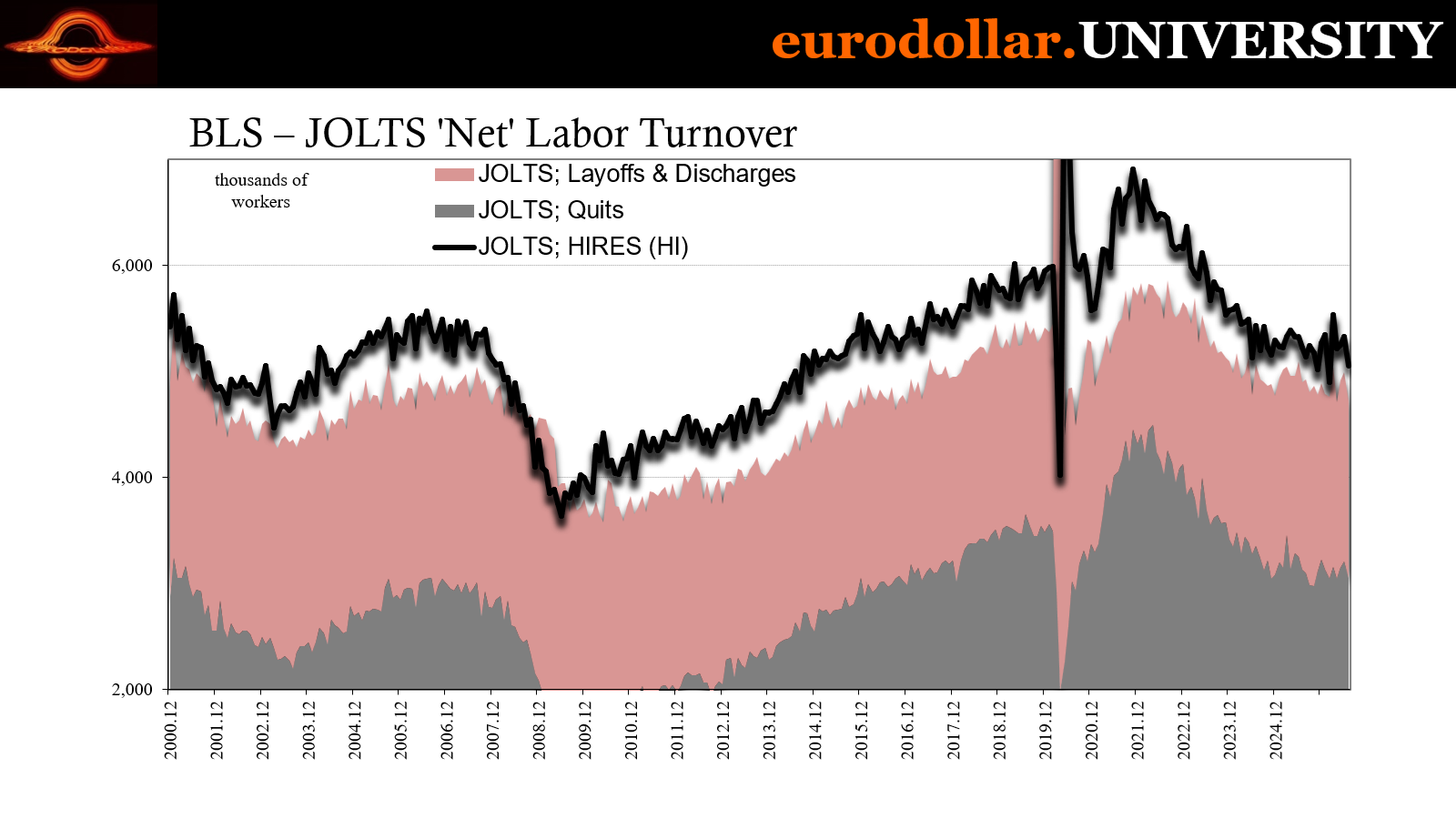
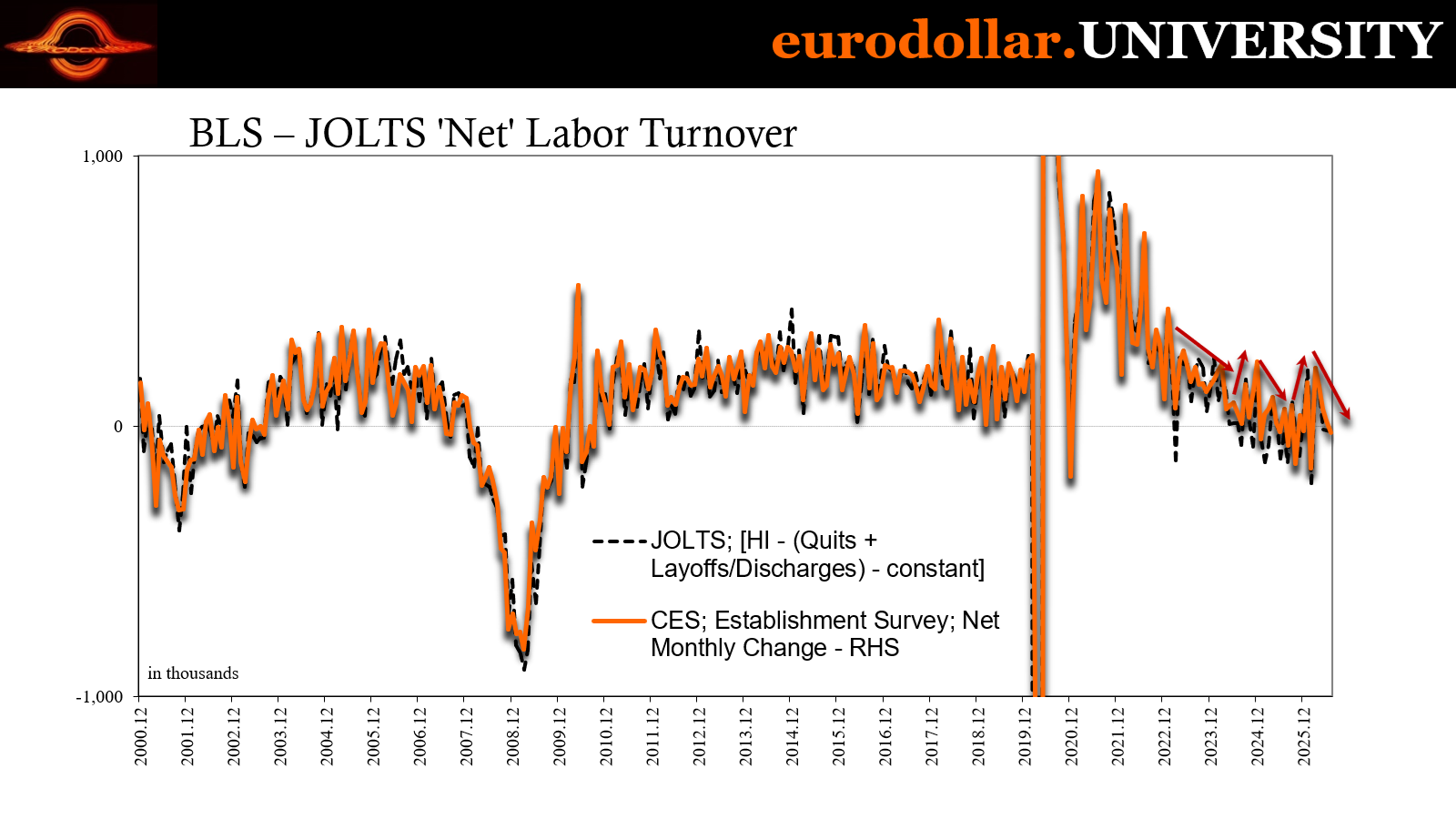
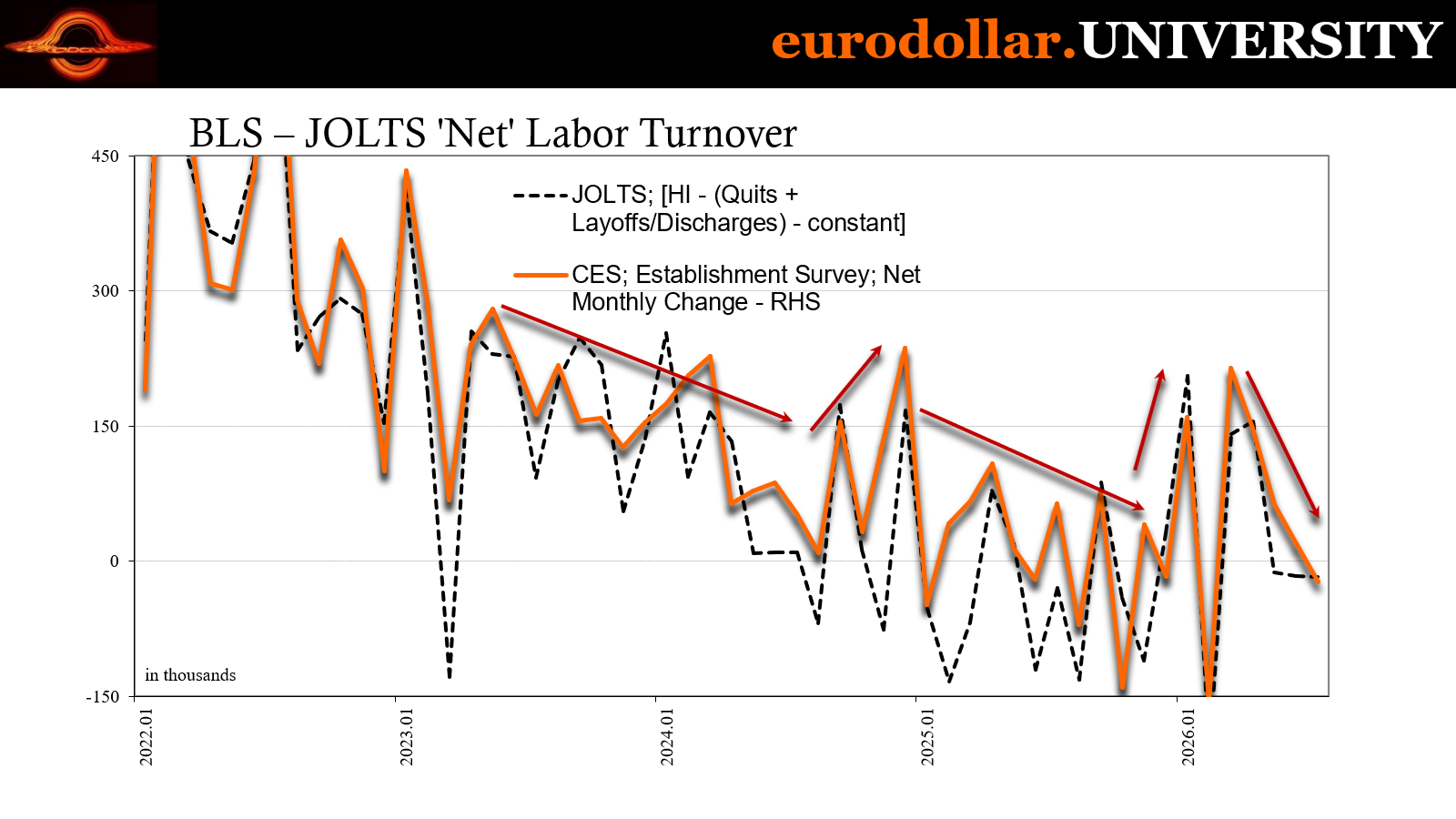
Most troubling, hires net of quits and layoffs were fractionally negative for the third straight month (after small revisions). This net-turnover calculation is not mechanically identical to the monthly payroll estimate: the surveys use different samples, reference periods, and definitions, while JOLTS includes other separations as well. Still, repeated negative turnover means the labor market’s internal engine is floundering.
And might offer a bad omen for the August payroll report to be released on Friday (though no one should be surprised if the initial estimate isn’t close to the eventual final one).
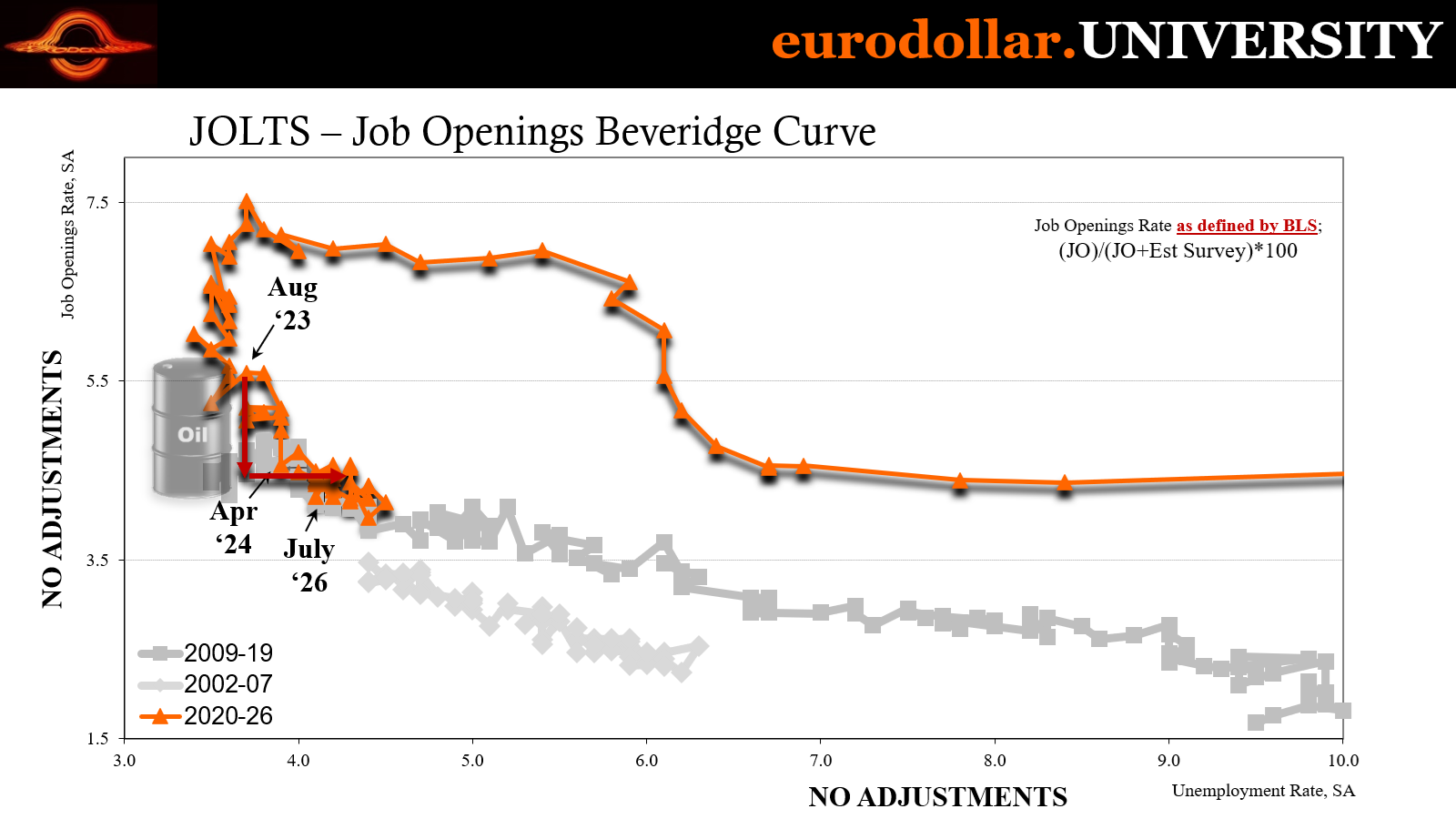
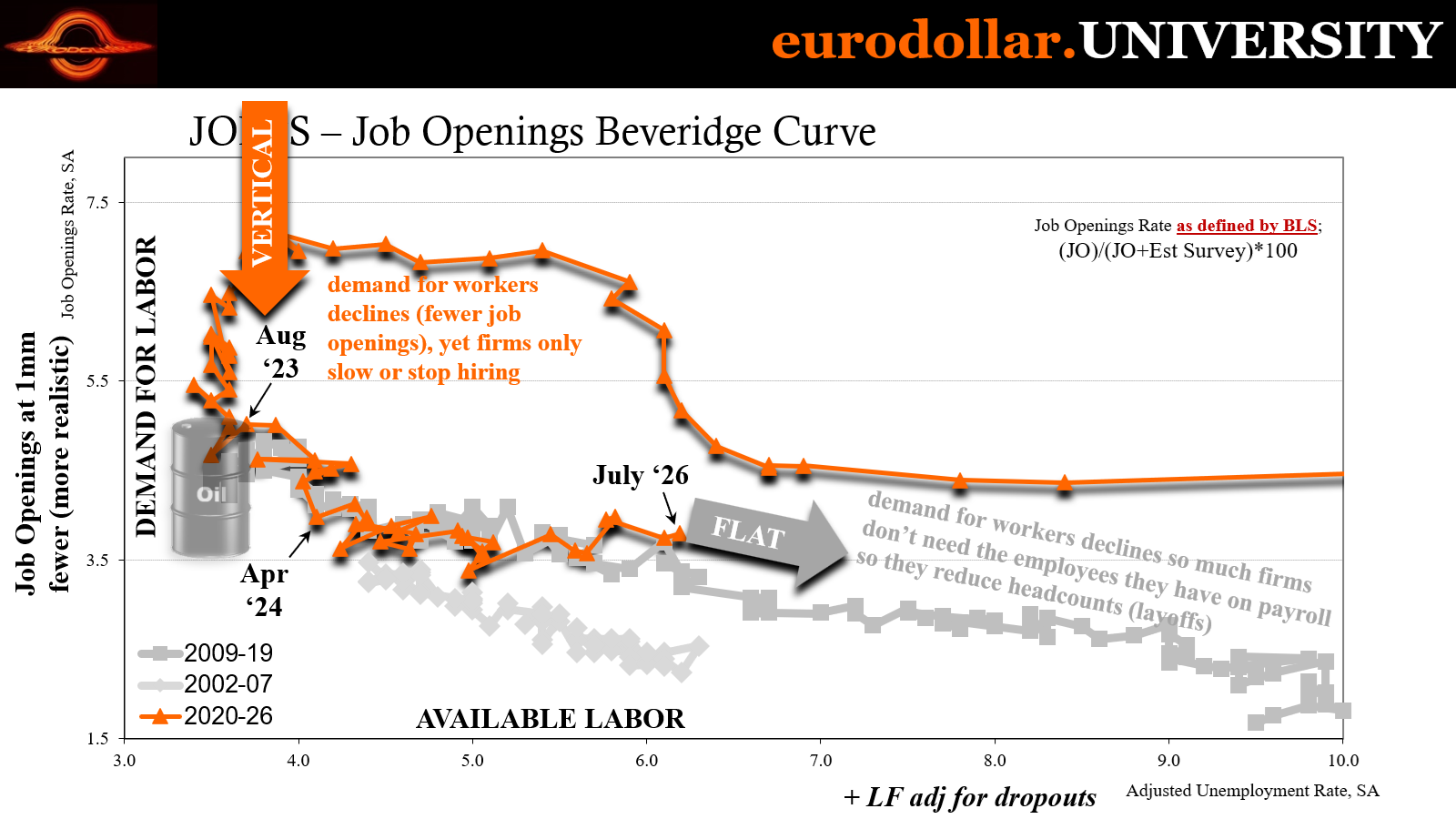
Flat Beveridge is missing workers
The Beveridge curve plots job vacancies against unemployment, two very flawed proxies for labor factors. Even so, the picture is useful anyway for what is illustrates about the most important element – changes or flows rather than the overdone focus on levels. It’s purpose is to show how the labor market is evolving, meaning that even overstated components might still end up contributing to our understanding.
If those charitable views express deterioration, all the more compelling for that direction.
Flat Beveridge is often attributed to improved matching or benign structural change. The current JOLTS flows suggest a less comforting explanation: workers are disappearing from the denominator of the unemployment rate. To be officially unemployed under the U-3 measure, a person must be without a job, available for work, and actively searching. Someone who becomes discouraged and stops searching is reclassified as outside the labor force. The unemployment rate can consequently fall even though that person remains jobless and would prefer employment under better conditions.
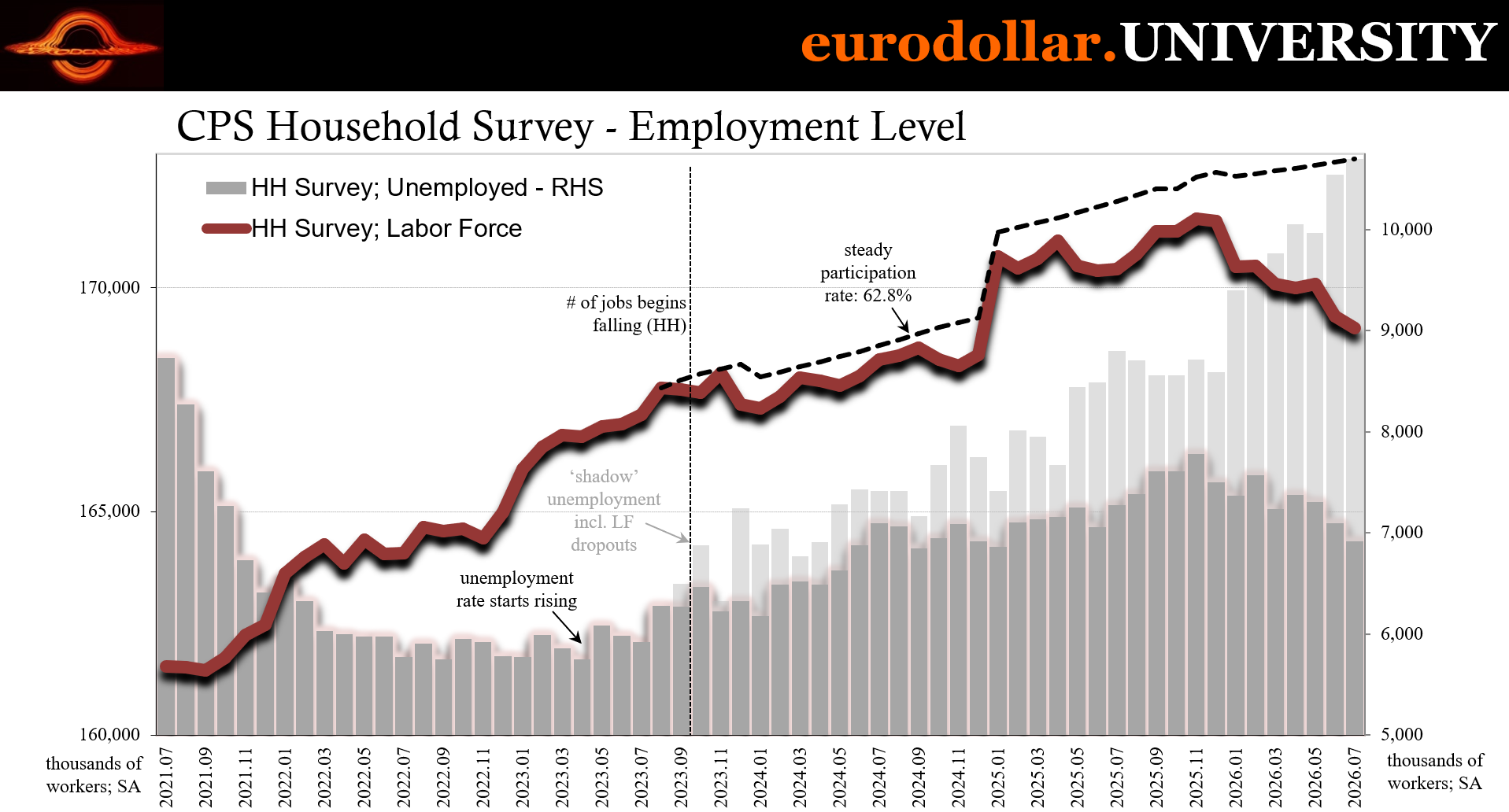
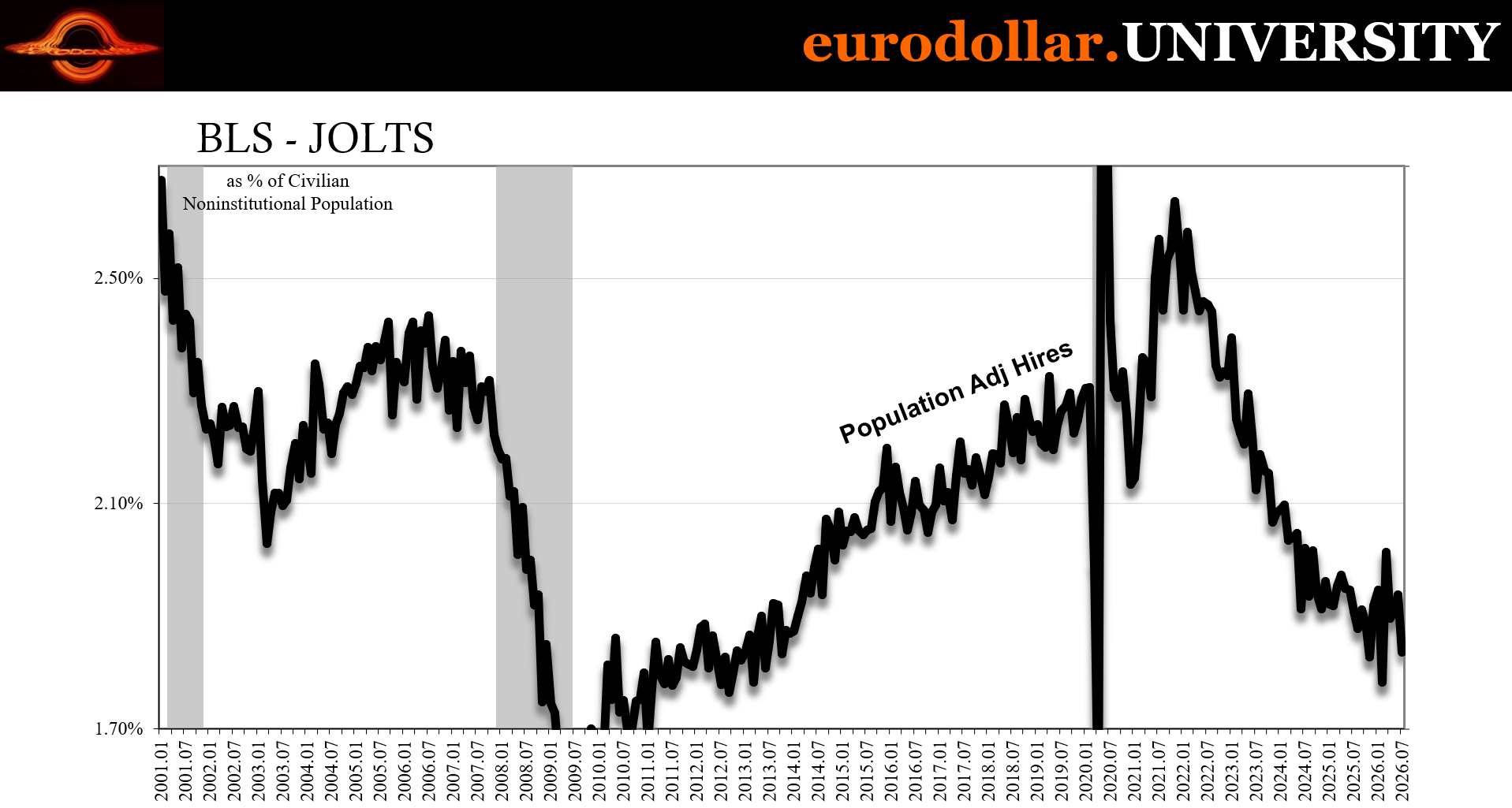
The unemployment rate is not arithmetically “wrong”; it measures precisely what it is designed to measure. It is nevertheless incomplete and increasingly misleading when participation is falling for macroeconomic reasons – thus, the very point of argument. Broader indicators—including the employment-to-population ratio, labor-force participation, marginal attachment, underemployment, and actual hiring — must then carry more analytical weight.
Weak hiring provides the logical bridge between labor-force exit and economic conditions. Searching for work has costs: time, transportation, child care, forgone opportunities, and repeated rejection. When hiring is plentiful, those costs are worth bearing because the probability of success is high. When hiring drops persistently, expected returns to search decline. Some people continue looking and remain officially unemployed. Others postpone entry, return to school, rely on family income, accept informal work, retire earlier than planned, or simply stop reporting an active search.
Demographics, health, retirement, and family choices always influence participation, so JOLTS alone cannot identify every individual motive. But simultaneous weakness in hiring, quits, participation, payroll growth, and net turnover make a purely benign explanation highly implausible. Participation at these low levels is especially difficult to reconcile with claims of a robust or even stable labor market.
If weakening labor demand produces nonparticipation rather than measured unemployment, U-3 will (badly) lag the deterioration. Policymakers waiting for a dramatic increase in unemployment may therefore be waiting for the wrong indicator. The low rate doesn’t invalidate negative payrolls; it helps explain how those payroll losses can occur without immediately producing a conventional recessionary unemployment signal.
And so why everyone is ignoring it. Or, better stated, everyone outside the bond market.
Acquired three mandates
The Federal Reserve was not created in 1913 with a modern maximum-employment mandate. Its original purposes involved providing an elastic currency, rediscounting commercial paper, supervising banks, and improving financial stability. The Great Depression fundamentally changed what Americans expected from federal economic institutions, but the legal history requires precision.
The political roots of an employment obligation lie in the 1930s; the Banking Act of 1935 also centralized and reorganized the Federal Reserve. Yet the government-wide statutory commitment to promote maximum employment came through the Employment Act of 1946, not through a clear Fed-specific command in the 1930s.
The 1946 act declared that the federal government should use its powers to promote “maximum employment, production, and purchasing power.” In practice, monetary policy became part of that responsibility. But the law’s language was broad, and Senator Hubert Humphrey later complained that it had been “conveniently ignored.”
Setting aside why or how an institution like the Federal Reserve and its tortured history of repeated large-scale failure could ever have been – or continue to be – expected, you can see the entire true purpose. The matter is politics not economics.
The 1970s turned ambiguity into crisis. Inflation rose, unemployment remained high, productivity weakened, and the supposed trade-off embedded in conventional Phillips-curve thinking broke down. Large econometric models had projected relationships that failed when behavior, expectations, energy prices, monetary arrangements, and financial practices changed. The era’s stagflation was not a policy failure, it was a public demonstration of how uncertain the economics of the eurodollar era had become.
In one sense, the rise of econometrics made some sense attempting to regain some insight just when monetary difficulties were becoming severe. The execution of econometrics, however, has always left a lot to be desired.
Darryl Francis, president of the St. Louis Fed from 1966 through 1975, personified resistance to the emerging model-centered orthodoxy. While much of the Federal Reserve embraced increasingly elaborate regression statistics, St. Louis emphasized accessible data and direct empirical tests. That legacy, by the way, ultimately helped produce the FRED database.

Francis also rejected the simplistic identification of high interest rates with tight money. During a 1971 FOMC discussion, he argued that “interest rates had been a very poor guide to the thrust of monetary actions.” So true. Funny how that view of actual history and economics fell naturally on the opposing side to econometrics.
Rapid economic expansion and inflation could raise credit demand faster than credit supply, producing higher rates even while money and credit expanded rapidly. Conversely, extremely low rates could accompany depression, monetary scarcity, and a desperate demand for safe, liquid assets. The price of credit, like any other price, could not reveal causation by itself.
Congress responded to more than a decade’s failures with increasingly explicit instructions. House Concurrent Resolution 133 in 1975 initiated formal monetary-policy reporting and targeting requirements. The decisive language came in the Federal Reserve Reform Act of 1977, which amended the Federal Reserve Act and instructed policymakers to promote “maximum employment, stable prices, and moderate long-term interest rates.” The Full Employment and Balanced Growth Act of 1978 — colloquially known as Humphrey-Hawkins — expanded the framework, reporting obligations, and employment goals.
Thus, the Fed legally has three objectives, even though officials routinely call the framework a “dual mandate.” Moderate long-term interest rates are commonly and, to some extent, correctly treated as derivative: if employment is maximized sustainably and prices are stable, long-term rates should also be moderate and relatively stable. That logic is reasonable. It also means the third mandate functions as a diagnostic check on the first two.


The monetary-target provisions eventually became irrelevant. By 2000, Alan Greenspan admitted the Fed could not reliably identify “true money” because financial products and near-money instruments had, in his words, proliferated. That happened long before the 21st century.
The FOMC allowed the formal targeting requirement of Humphrey Hawkins to expire. Monetary policy became increasingly synonymous with manipulating an overnight interest-rate target (therefore not actually monetary policy) and then estimating its effects through those same bad models. Congress had responded to the failures of the 1970s by demanding observable outcomes; the Fed responded over time by relying even more heavily on unobservable variables such as the neutral rate, the output gap, and inflation expectations.
Worst of all, they moved in the opposite direction from Partee’s warning, relying on interest rates to judge the perceived successes of central bank efforts.
Warsh and the yield curve’s emboldened verdict
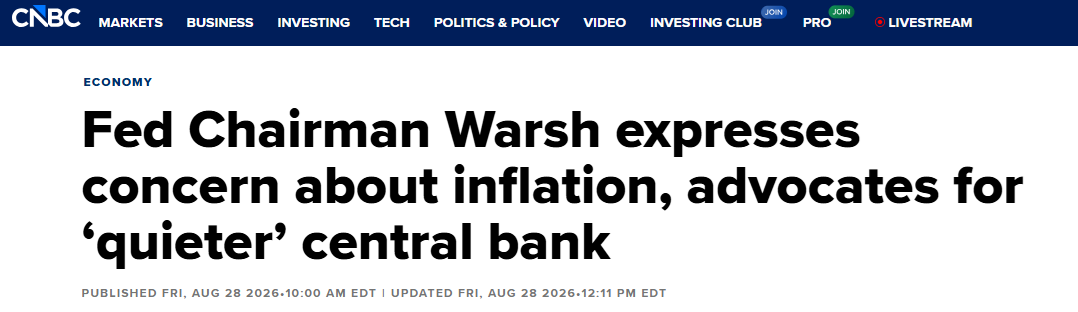
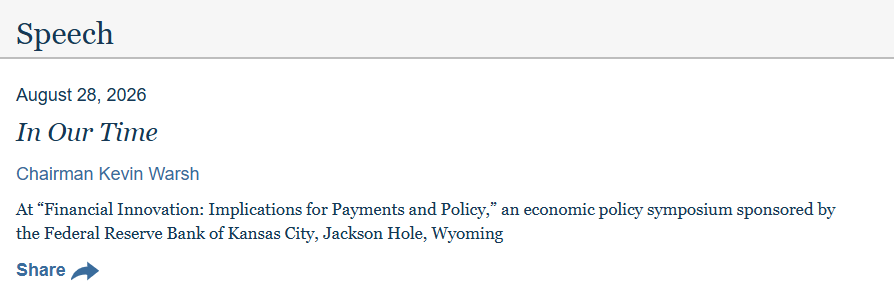
At Jackson Hole last week, Kevin Warsh acknowledged that summer inflation readings had been better than expected but said they didn’t necessarily demonstrate that underlying trends had “meaningfully improved.” He insisted the Fed must be confident inflation is returning to objective “clearly and at sufficient speed,” describing that task as the institution’s mandate and charge; as if there is only the one.
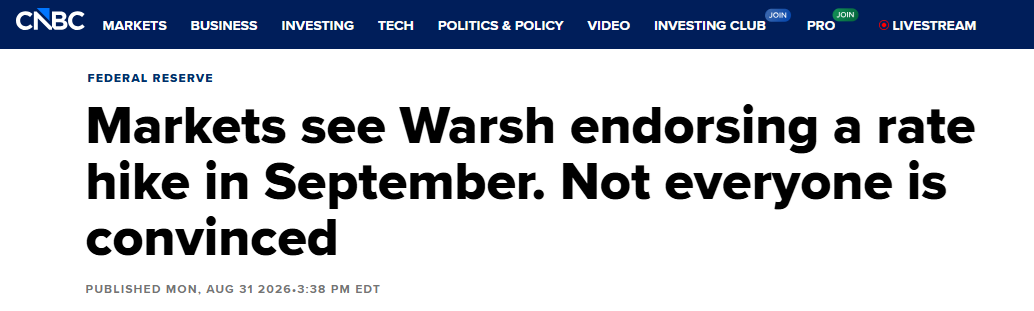
Markets interpreted the comments as potentially endorsing a September rate hike.
Yet the interpretation is far from unanimous. Treasury Secretary Scott Bessent characterized the price increase as a supply shock and argued that central banks traditionally don’t raise rates into such a shock (Trichet) unless second- or third-order effects emerge. Citigroup economist Andrew Hollenhorst similarly noted cooler inflation and softer hiring, concluding that there was neither an urgent justification nor an FOMC consensus for higher rates.


Price stability is an outcome Congress assigned to the Fed, but that doesn’t mean the Fed possesses the instruments required to control every price disturbance; or any price disturbance. If inflation remains above target, the price mandate is being missed in an outcome sense. If the excess reflects supply constraints rather than excessive monetary demand, however, higher policy rates are reflected back in disturbances in market interest rates.
The third mandate exposes the problem. Long-term interest rates today remain low by broad historical standards, even though they’re talked about very differently (soaring to two-decade highs when the truth is they’ve gently risen to the low levels which had existed prior to 2008). Persistently low long rates reflect weak expected nominal growth, demand for safety, and pessimism about future employment — depression economics rather than successful accommodation.
Meanwhile, a flat and potentially re-inverting yield curve indicates that markets don’t expect a stable path. The curve suggests near-term Trichet risk colliding with weaker future growth and eventual rate reductions. Curve inversion is not magic, but its message is consistent with weak hiring, falling quits, declining participation, and negative net turnover.
Flat Beveridge.
The Fed is correct that success on employment and prices should make moderate, stable long-term rates largely take care of themselves. But the reverse implication follows. If long-term rates are historically depressed and the curve is unstable, which right now it is, then at least one of the first two objectives is failing. Warsh’s interpretation places the failure primarily on inflation. The labor flows and yield curve place it much more heavily on employment.
The July JOLTS report is not a picture of resilience. A small increase in openings cannot outweigh the downward revision to June, the third worst hiring of the last half-decade, a quits rate near its post-2020 low, declining participation, and a third consecutive month of negative net turnover. Openings describe possibilities; hiring records decisions. Employers are making too few of them, and workers understand that reality well enough to avoid quitting.
That behavior explains why unemployment hasn’t risen as much as deteriorating payroll and hiring data might imply. In this kind of flat Beveridge environment, labor-market weakness can appear first as lower participation rather than higher U-3 unemployment – just like the 2010s. A low unemployment rate therefore does not excuse negative payroll readings. It is produced by the same weakness causing them.
The history of the Fed’s mandates makes this failure plain. The employment objective emerged from the Great Depression and the Employment Act of 1946; the explicit three-part command was imposed after the economic and intellectual failures of the 1970s. Congress did not direct the Fed merely to adjust an overnight rate. It required maximum employment, stable prices, and moderate long-term interest rates.
The flaw was in coming to believe these could be achieved by manipulating an administered overnight money rate as a communications tool. It truly is as stupid as it sounds.
Today, none of those three offers reassurance. Employment flows are deteriorating. Prices remain disturbed, but much of the pressure bears the signature of supply constraints that higher rates would never be able to repair even if that’s how they actually worked. Long-term rates remain historically low, while the flat, potentially re-inverting curve anticipates even more instability rather than moderation.
The yield curve is doing what the third mandate was designed to do: checking the story told about the first two. Its verdict agrees with JOLTS. The Fed’s most immediate failure is not excessive employment generating runaway demand. It is an employment market that is already far weaker than the unemployment rate admits. And also the reason why.