ONE STEP FORWARD, TEN YEN BACK
EDU DDA Jul. 10, 2026
Summary: The Japanese government appears to have finally figured out why the yen keeps weakening. After flushing trillions of them down the toilet with direct FX intervention, someone seems to have told the Finance Ministry what’s really going on: the carry trade. Not the cartoon the financial media describes, the real one. Japan’s biggest firms don’t want to invest in Japan. Worse, the BoJ’s rate hikes are counterproductive, making them want to invest even less. Recognizing the problem is one thing, doing something constructive about it is quite another.
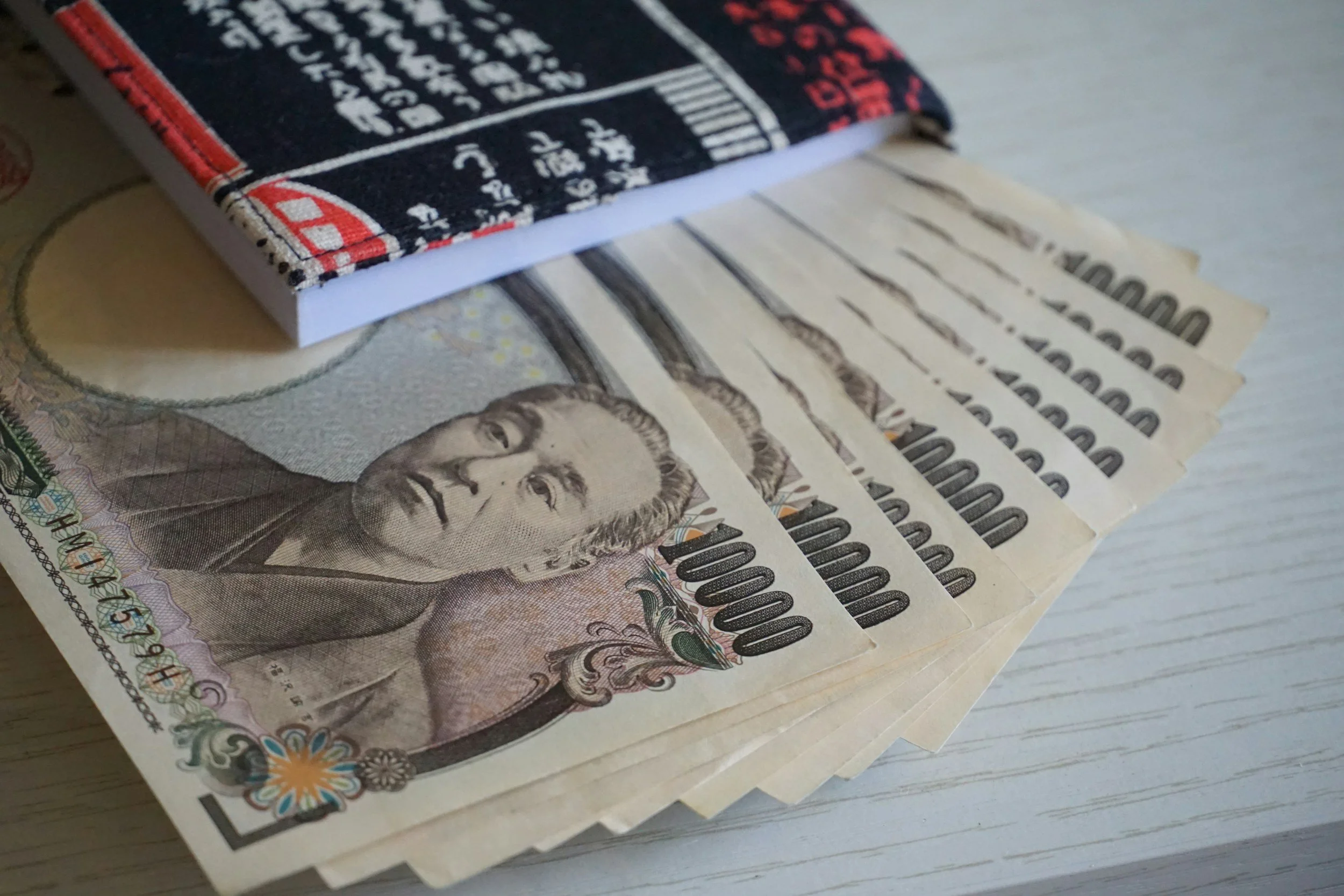
The yen carry trade has been constantly misidentified and falsely explained. What the mainstream financial media says describes is a cartoon, not the full truth. The vast majority of “carry trade” activity originates from inside Japan, not Connecticut hedge funds seeking maturity transformation from its markets. But no one can admit the truth because the truth once again doesn’t agree with the Economics textbook.
This true carry trade has carried on this long and gotten to be this large simply because central bank policies don’t work. It really is that simple. Carry traders are betting against them. So, we have to listen to the kindergarten mainstream description.
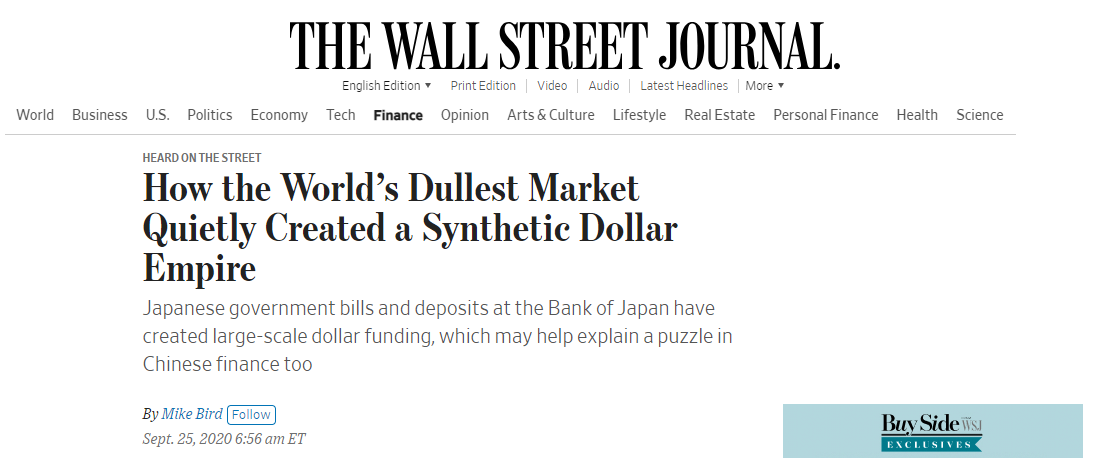
As one consequence, Tokyo has spent years treating the yen’s weakness as if it were an FX-market vandalism problem: speculators, hedge funds, one-way traders, offshore momentum, anything except the structure sitting in plain sight inside Japan’s own financial system. After burning through roughly $75 billion in official reserves through direct currency intervention — lighting it on fire, flushing it into the foreign-exchange toilet, and proving once again that governments do not command global money — Japan’s authorities now appear to be aiming at the real issue.
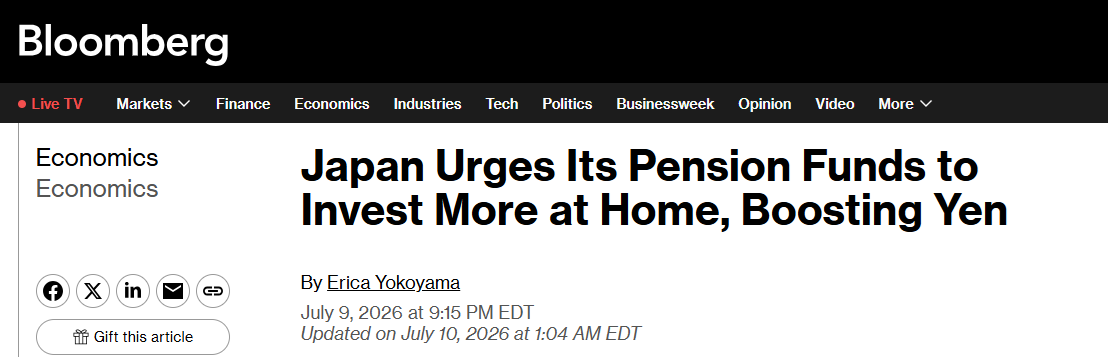
But now Bloomberg reports that the government wants more domestic investment from the GPIF and other pension funds, while yen traders are already asking the obvious question: how much influence does the Finance Ministry really have.
The real carry trade is not primarily hedge funds outside Japan borrowing cheap yen and buying global assets. That exists, but it is not the core mechanism. The true carry trade is the ocean of Japanese money — banks, insurers, pensions, trusts, and other financial giants — which doesn’t want anything to do with Japan. It takes domestic yen savings and balance-sheet capacity, transforming them through swaps and collateral channels, and redeploying them into dollar and global assets because Japan itself cannot offer enough return.
The weak yen is therefore not just a rate-differential story. It is a risk-adjusted return story.
That is why Bank of Japan rate hikes make the yen weaker, not stronger. By destabilizing JGBs, creating mark-to-market losses, and deepening the buyer’s strike among Japanese financial institutions, the BoJ reduces the appeal of keeping money at home. The summer of 2024 revealed this real carry trade during its disorderly unwind. Tokyo may finally be diagnosing the disease, but diagnosis is not a cure.
Too small to explain yen
The standard explanation goes like this: Japan has low interest rates, the United States has higher interest rates, so hedge funds borrow yen, convert the proceeds into dollars, buy higher-yielding assets, and pocket the spread. When the yen weakens, this trade works. When the yen strengthens, it blows up. This version is simple, intuitive, and easy to repeat in a two-sentence tweet.
It is also laughably incomplete.
The problem is not that this trade never happens. Leveraged funds do borrow in low-yielding currencies and fund positions elsewhere. But nowhere near enough, or persistent enough, to explain decades of Japanese outflows and the repeated yen weakness that creates. The enormous global footprint of Japanese financial institutions do and then yen stress connects to dollar funding and global credit markets.
Japan’s real carry trade begins with the domestic balance sheet. Japan is a country with enormous savings, aging demographics, so massive institutional pools of capital that need to fund gigantic future liabilities. Reach for yield isn’t a temporary strategy. Plus, keep this in mind – ALWAYS – it’s never about nominal returns, always risk-adjusted.
Therefore, the weak domestic growth and a government bond market that for years offered little yield was never going to keep yen home. Add to that more recently the Bank of Japan’s insanity (more below), creating far more price volatility, there was even less reason not to carry trade elsewhere. Banks, life insurers, pension funds, and other financial firms have liabilities in yen, but they could never meet return targets by simply sitting in domestic cash or JGBs.
They are not “borrowing yen” in the simplistic hedge-fund sense. They already have yen, whether cash or JGBs (bills or bonds). The question was always what they do with it.
For years, the answer has been to send it abroad, directly or indirectly.
That means buying foreign securities, starting with U.S. Treasuries and agency debt, then engaging the whole constellation of overseas options from corporate credit, CLOs, and leveraged loans to funding China or other emerging market needs, whatever else can provide sufficient spread. But the economic impulse is the same: Japan cannot produce sufficient domestic risk-adjusted returns, so Japanese financials look elsewhere.
With yen widely available and readily accessible, it served as the collateral for swapping into dollars cheapening the dollar funding costs as much as possible. Once the institutions had dollars, they could go anywhere with them, the real beauty of a true reserve currency. It is the vehicle or intermediary that opens every door. The yen collateral part of it opened the door wide from the Japanese, more than for anyone else.
This is the real carry trade. It’s not a couple macro tourists renting yen for a quarter. This is the structural offshore deployment of Japan’s savings system and a key part of the eurodollar network.
And that is why the yen remains chronically vulnerable. If Japan’s own institutions decide the best use of yen is to transform it into dollar assets, then the currency has a built-in headwind. Official intervention will never fix that. It can interrupt the price for a few hours or days but won’t alter the portfolio math driving the flow.
Why Official Intervention Failed
Japan’s Ministry of Finance has repeatedly tried to defend the yen through direct intervention. Sell dollars, buy yen, signal resolve to scare speculators, then hope the market backs off. The trouble is that intervention only works when the market is dealing with a temporary positioning problem. It won’t work when the pressure reflects a structural balance-sheet preference.
That is why the $75 billion from May matters. Not because Japan lacks reserves, the country has plenty of those (though it could burn through them quickly keeping up at that rate). The point is that spending official reserves was never going to change the underlying incentive structure. It was an expensive admission that Tokyo had misidentified the target.
What always happens when relying on the Economics textbook.
If yen weakness were mostly caused by offshore hedge funds, then official intervention might force a short squeeze, at best. If speculative accounts were massively short yen, a sudden official bid would indeed force them cover, triggering a self-reinforcing rally, one that fizzles much faster than advertised.
It quite simply never addresses the underlying structural imbalance where domestic institutions keep asking the same question: why should we hold more money in Japan?
The government is now inching closer to the right answer by seeking more domestic investment from the GPIF (the creatively named Government Pension Investment Fund) and other big institutions, including other pensions funds and the insurance industry. In theory, this is exactly where the conversation should have been all along.
If Japanese savings stay home, or if less of Japan’s institutional capital is transformed into foreign assets, the yen’s structural pressure eases. More domestic demand for Japanese assets means less persistent swapping into dollars therefore less downward pressure on the yen.
But there is a difference between recognizing the channel and doing something constructive about it.
The GPIF and pension funds are not supposed to be FX-stabilization arms of the Ministry of Finance. They have fiduciary mandates which require returns. Japan’s demographic problem makes that even more important, not less. If the government pressures pension money to invest domestically for currency reasons rather than return reasons, then it risks turning retirement capital into another policy tool.
One that requires those institutions to go along with it when they’ve shown no inclination to do so.
Currency strength comes from a credible reason to hold the currency. Intervention supplies a transitory bid. Domestic opportunity would provide the foundation. Japan has had too much of the former and way too little of the latter. At the end of the day, it’s always risk-adjusted returns. For decades, the Japanese behemoths have definitively shown what they believe about Japanese risks.
It’s not what any of them say, it’s what all of them have done and will keep doing.
BoJ hikes help weaken yen
It’s comical how much Economist get completely backward. The Economics textbook says higher interest rates should support the currency. All central bankers believe this, they tell the public the same and get politicians to buy into the fiction. If Japanese rates rise relative to U.S. rates, the yen should become more attractive and shrink if not eliminate the carry incentive.
That model is clean and entirely too narrow and simplistic.
It focuses on nominal interest-rate differentials while ignoring risk-adjusted returns, collateral quality, balance-sheet volatility, and institutional behavior. In Japan, those omissions are fatal.
The BoJ’s rate hikes don’t simply raise the coupon on yen assets. They also destabilize the price of Japanese government bonds. For institutions that hold JGBs in enormous size, higher yields mean mark-to-market losses. More importantly, unpredictable BoJ policy creates uncertainty over how far the adjustment might go. If a bank, insurer, or pension fund isn’t able to confidently assess the future path of JGB yields, then JGBs become less attractive even if their nominal yield is higher.
That is the buyer’s strike. The central bank risk of holding a JGB grows faster than the nominal yield.
Japanese financial institutions have already reduced JGB holdings or become more cautious about adding duration. They aren’t refusing to buy because Japan is suddenly insolvent in the cartoon “bond vigilante” sense, rather because the BoJ has made the return profile uglier. A 2.5% or 3% JGB yield is not automatically attractive if the investor fears capital losses due to irrational policy volatility. In that world, the nominal yield rises but the risk-adjusted return falls.
This is how rate hikes have contributed to the weaker the yen when the textbook says they should be the cure. Meanwhile, practical experience proves beyond a doubt what the Economics version is really worth.
If domestic assets become more volatile, Japanese financials have even less reason to keep money at home. They may prefer foreign assets despite currency risk, especially if those assets offer better spread, deeper liquidity, or more flexible collateral treatment. The textbook sees a narrower rate differential and expects yen strength. The balance sheet sees a less stable domestic bond market and chooses to carry even more offshore.

There is also the collateral angle. JGBs have traditionally been useful not merely as investments but as safe, liquid instruments in funding chains. When the BoJ injects volatility into that market, it changes how those instruments function. A JGB that was once a quiet parking place for yen becomes a source of price risk. That matters in swap books, repo books, insurance portfolios, and bank securities portfolios.
The more unstable the domestic collateral base becomes, the less attractive the yen system becomes. So, the BoJ thinks it is defending the yen by hiking. In practice, it is damaging one of the main reasons Japanese funds might remain domestic in the first place.
Thus, the policy loop becomes perverse: the yen weakens, officials blame rate differentials, the BoJ hikes, JGBs become more volatile, domestic institutions reduce appetite for Japanese assets even more, intuitional money continues moving offshore weakening the yen all over again.
Summer 2024 illustrated the truth
The summer of 2024 was the warning flare. The mainstream called it a yen carry-trade unwind, but again framed it as leveraged foreigners being forced to cover yen shorts. There was some of that, but the deeper signal came from Japanese institutions and their global risk positions.
For years, Japanese financials had been pushed outward along the risk curve. First, U.S. Treasuries offered a relatively simple answer: higher yield, deep liquidity, easy repo treatment. But when curves flattened, dollar funding costs rose, and hedging became expensive, the spread was no longer enough. So, the search for yield moved into structured credit: CLOs, leveraged loans, private credit, and other dollar assets that seemed safe enough as long as the U.S. economy was humming along to Jay Powell’s preferred tune.
Sadly, Powell can’t pick a song.
By mid-2024, the soft-landing narrative began to crack. U.S. labor-market data weakened as hiring slowed. Credit spreads started to stir, and the risk embedded in supposedly safe carry positions became harder to ignore. If Japanese institutions owned dollar credit because they believed U.S. growth would stay resilient, then evidence of recession risk changed the entire equation. Suddenly, it was not just about yield, it was about liquidity, collateral value, and exit capacity.
When everyone reaches for yield in the same instruments, the exits are never wide enough.
The yen’s sharp rally during the unwind was therefore not proof that the old textbook model was right. It was the opposite. The sudden reversal showed that yen strength would occur during forced deleveraging, not because Japan had become fundamentally more attractive. Investors and institutions closed positions, reduced dollar exposure, covered funding legs, and pulled back from risk. That generated mechanical yen demand.
It happened twice in relatively close succession. Once in the summer of ’24 and then again at the end of the year into ’25.
Once the forced unwind(s) passed, the structural problem remained. Japan still lacked sufficient domestic return. JGBs hadn’t magically lessened their volatility as the BoJ was still threatening more hikes. The yen’s weakness returned because the real carry trade was never solved.
Summer 2024 mattered because it revealed who the real players were and what they were afraid of, which was not a “stronger” yen. They recoiled against the implications of the global assets used to escape Japan’s low-return environment which suddenly seemed no longer safe enough to justify the risk. As I pointed out recently, the whole episode was a previous of what was to come in the US economy and private credit.
That is the real carry trade in motion: not a cute arbitrage, but a global balance-sheet structure. The Japanese were right about a lot of things, it has turned out, from credit distress to flat Beveridge and the constantly weakening yen they keep wanting to swap out of.
Japan’s new focus on domestic investment is a small step in the right direction because it finally acknowledges that yen weakness is not just about speculative positioning or nominal rate spreads. The yen is weak because Japan’s own savings system has powerful incentives to leave. If banks, insurers, pensions, and households can earn better risk-adjusted returns abroad than at home, then the currency will remain under pressure no matter how many times the Ministry of Finance intervenes.
But recognition may be as far as Tokyo can get.
The government can encourage pension funds to invest domestically or jawbone institutions. Officials can design incentives. They can make the GPIF think more locally. None of it can easily manufacture attractive domestic returns. That requires productivity, legitimate growth, stable collateral markets, and a JGB curve that investors can trust. Those aren’t dictated by press conference.
BoJ is central to the problem. Rate hikes meant to support the yen instead undermine it by making JGBs more volatile and less desirable; the central bank is giving the very institutions it has to depend on to stabilize the currency even less incentive to do so! If the domestic risk-free asset becomes a source of uncertainty, then the entire domestic investment case deteriorates. Higher nominal yields don’t help if the risk-adjusted return worsens.
That is the part the textbook misses which the market understands.
The yen doesn’t need another symbolic intervention or officials blaming hedge funds. JPY doesn’t require another ritual sacrifice of foreign reserves. Japan needs to become a place where Japanese capital wants to stay voluntarily. And that is something altogether different.
Tokyo may finally be looking at the real carry trade. But the hard truth is that seeing the machine is not the same as changing it.